
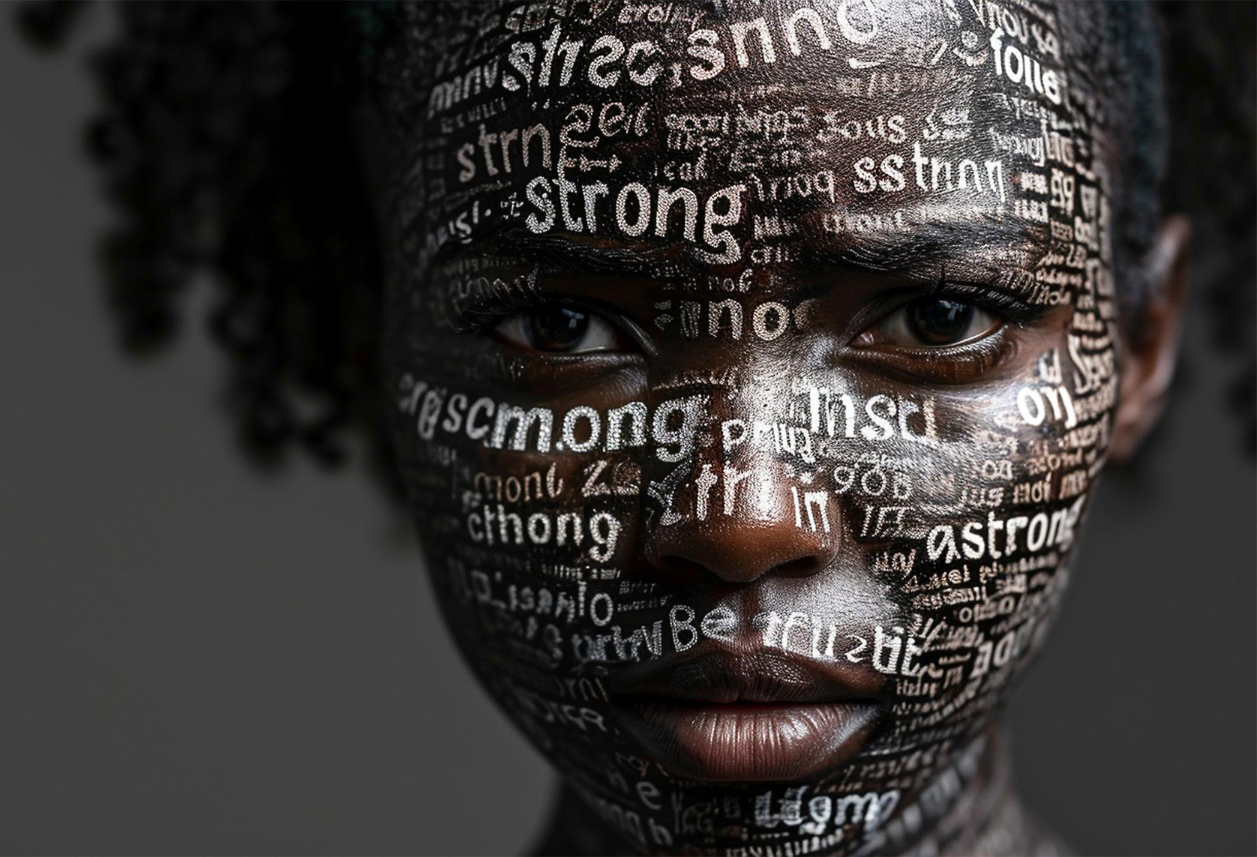
100 YEAR LANGUAGE EXTINCTION.
First published in 2026
Don't like to read? Here is an audio version of this page. This is an AI reader.
It has happened before, it is happening now, and one day, your children’s children might be speaking French or Mandarin, or even Hausa if the current trend of massive fertility rates in Nigeria and Niger continues.
But what about Xhosa, Zulu, or Afrikaans?
Will they be around by 2126?
It’s a serious question because there are some linguists who are predicting that up to 40% of Africa’s 2000 languages face total dinosaur level extinction, and that’s above the 80 or so already lost since 1926ish. So what’s on the chopping block for the future? For sure there are at least 20 languages to be immediately concerned about because they have incredibly low speaker counts, some with less than 100 people remaining!
Closest to home, Southern Africa, we have Khoisan, Tuu, and Khoe families. Here in South Africa, N||ng (N|uu) is down to its last fluent native speaker, Dr. Katrina Esau… and then there was one, and then there was none? Xiri is shared with South Africa and our sister nation Namibia, now spoken by fewer than a hundred elderly Griqua people – bless them. Korana also in Mzazi, G||ana and G|ui in Botswana. A little further up Africa, around the East & Horn, there are Gafat, Ongota, and Shabo all in Ethiopia, Nyang’i in Uganda, and El Molo, Yaaku, and Dahalo in Kenya. In West & Central Africa there is Njerep, and Bung in Cameroon, as well as Bete, Luri, Yiwom, Bakpinka, and Gyem in Nigeria.
(I hope I have not left anything out here or made a mistake.. if I have, please forgive me, and don’t worry too much because my social media hecklers will let me know soon enough!)
What boggles my mind is that none of these are Western languages? Does that not appear odd? Well, languages do not disappear randomly like money in a couch, or funds in a municipality, there is often one of three primary influences normally at play, sometimes more. The first is Urbanization & The Lingua Franca Shift. We all know as rural populations migrate to major urban hubs, families unfortunately abandon localized tribal dialects in favour of regional trade languages. I have said it before, but let me say this again: you cannot have economic freedom if we do not have linguistic equality.
The second force is Institutional Education Policies. Many African education systems rely on old European colonial languages like good old English, French, or even Portuguese.
Then finally, and the newest entry to the realm of influences is the Digital Divide. A massive 88% of African languages suffer from a total lack of computational data. If a language is not integrated into smartphones, Smart TVs, those machines at Clicks that allow us to be part of their Queue and get medical attention, or keyboard layouts, and AI models, our current and younger generations will completely drop them in favour of digital global standards. Data sovereignty in Africa is about language as much as it is about data or trade.
With the above said and done, and bearing in mind that approximately 25000 languages have already gone extinct over the course of humanities history, and those just the ones we know of! (The vast majority of all languages over time have been passed down orally, so you can assume that about 80% + of all languages that have ever existed just vanished without leaving any written record at all). Then, and also bearing in mind that there are with now, between 7100 and 7150 recognized living languages spoken in the world, depending on whom you speak to – excuse the pun, we need to ask ourselves how will we be communicating in the future?
The rate of language extinction is expected to increase (sort of like the expansion of the universe – but that’s a separate article), and there are some who believe that by this date (I wrote this 14th of July 2026), but in 100 years’ time, there will be 3500 left at best-case scenario, or 700 at worse!
A question we need to ask is: “will fewer languages mean humanity is worse off?” I don’t believe it will be, and I share the ‘Efficiency View,’ which basically says that if we all speak the same language, more or less, humanity will enjoy massive economic savings, faster scientific collaboration, and far better political and social unity. Others who oppose this belief, believe the world would lack worldviews and that there would be psychological and cultural devastation.
Now, onto the bull in the China shop, and I am referring to AI, which will simultaneously serve as the greatest preservation tool for dying languages and at the same time smash everything up and accelerate the global extinction of others. Tools like digital translation applications and devices will bridge cultural divides in the coming years, but they just like AI could have a negative net gain, think about it, what’s the incentive to learn if we don’t need to?
The fact of the matter is, if a language is to survive, it has to digitize, and those who are the custodians of the language have to mobilize and act now for their preservation. One language I thought would be on the ‘goodbye list’ would have been Afrikaans, but it turns out, it’s not. In fact, it’s classified as a “stable” and healthy language by Ethnologue. The common misconception is that because Afrikaans is losing its percentage share of the South African population, the language is physically shrinking, but according to Statistics South Africa’s Cultural Dynamics Report, the opposite is true. The total native speakers remain the third most spoken home language, a first language for more than 7.4 million people. There has actually been a net growth from 1996 to the most recent census data; the absolute number of primary Afrikaans speakers increased by over 700000 people! And here’s the kicker: it might be the most demographically diverse language in South Africa!
More than half of all native Afrikaans speakers are people of colour. The language remains the primary home language for roughly 70% of Coloured South Africans and is the majority language across the entire Northern Cape province (54.6%) and large sections of the Western Cape. So, for those of you who are or were worried, perhaps because of the changes in tertiary education, the BELA Bill, or the digital deficit, well you need not worry so much anymore. As for the rest, there might be something for other language custodians to learn here.
Afrikaans has had a few tools at its disposal, such as media powerhouse, economic dominance, strong civil infrastructure (independent cultural organizations, civil rights groups, and private education networks). Its speakers also appear to be open to linguistic evolution. They have also fully embraced tech, and you will find Native-Language Digital Media & Apps, like Afrikaans.ai
What can we learn and apply from this? Rather than dying out, spoken Afrikaans is actively evolving through localized urban dialects (like Kaaps in the Western Cape). So, while isiZulu will almost certainly remain the most spoken home language in South Africa in 100 years, and English is likely to solidify its power as the country’s dominant language of public life, commerce, and media, Afrikaans is likely to become the custodian language of Coloured people, firmly grounded in the Western and Northern Cape. Time will tell, and there are other factors of influence at play, such as migration, which could see Shona taking 4th place in South Africa.
Handei tinodzidza kutaura Chishona.
The END.
WANT TO READ MORE ARTICLES?
But wait, there is MORE!

Who is Jean-Pierre Murray-Kline?
Jean-Pierre is a South African serial e-entrepreneur, published author, and change champion who has worked in over 300 types of industries in some capacity or another. His own online businesses have generated millions of Rands and involved sectors such as law, web & app development, events & entertainment, property, technical services, media, and tourism.
He has travelled to over 180 cities worldwide and is extremely active as a business and environmental technologist. In addition to his own projects, he researches and consults on all things online: marketing, reputation, compliance, law, and e-security, and also offers strategy workshops and scenario sessions on future thinking with a key focus on technology, the environment, and global influences.
Jean-Pierre is often asked to be a guest speaker on a variety of subjects he continuously studies and writes about.