NUGGET (27 NOVEMBER 2026)
Nuggets! (Bite-size updates on the really important stuff related to Tech, Trends, Business, and the Planet.)
I’M GUTTED
I’m gutted. COP31 in Antalya has ended in deadlock, even after two extra days of talks.
Natural Justice reports that the promises made in Belém at COP30 were simply walked back. The three things Africa needed most all stalled: money to adapt, protection for the brave people defending our land and rights, and finance for a fair energy transition.
As an environmental technologist, I see this every day. Africa did the least to cause this crisis, yet we’re the ones living with the droughts, the floods and the heat. Every year of talk without action costs us lives, jobs and our future.
So here’s my challenge to you. Let’s not wait for the world to save us. Let’s build the solutions right here at home, with our own innovation, our own businesses and our own voices, and keep holding our leaders to their word. Africa can lead this. I believe that with all my heart.
ESKOM’S SURPLUS
Eskom’s surplus capacity has now reached 4,274 MW!
Can you believe it? But, before you celebrate, remember please that practically none of that surplus is green energy. It’s almost entirely idle coal capacity, while utility-scale renewables still make up only about 9% to 11% of South Africa’s overall grid.
And before anyone says “This is Africa” or “We can’t be compared to Europe,” let me remind you, dear reader, that Ethiopia generates 96% to 99% of its electricity from renewable energy. That shows African grids can run on clean power when investment and infrastructure are prioritised.
BAOBAB RESCUE
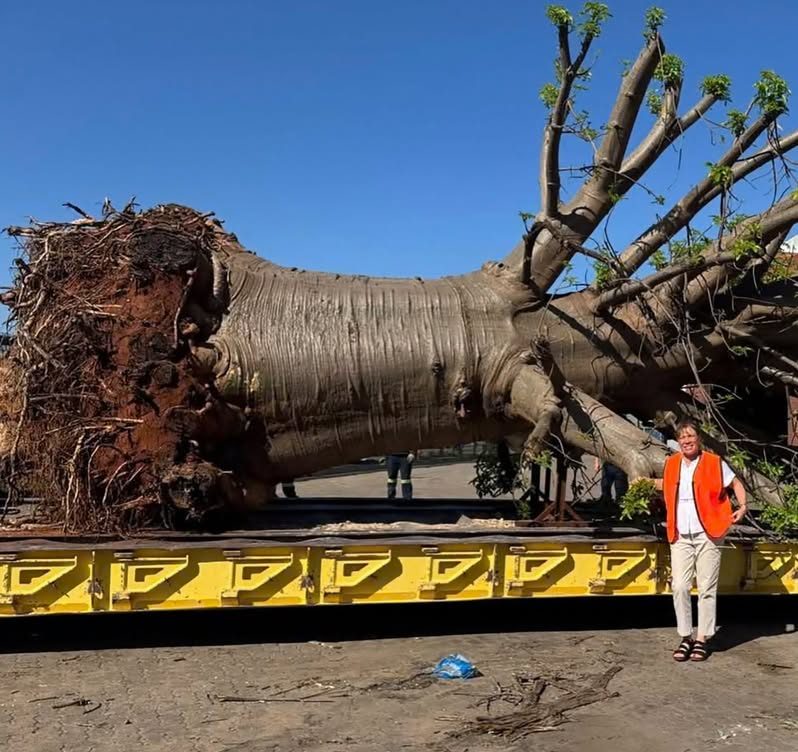
Happy news for me! Five centuries-old South African baobab trees, each weighing between 19 and 30 tonnes and estimated to be 200 to 300 years old, have been rescued from an awful fate and replanted at the Timbavati Private Nature Reserve in Limpopo!
This follows successful action by authorities to block their illegal export to Georgia. Huge thanks to the authorities (and the other change champions behind this) for protecting our natural heritage.
Now if we could just get rid of plastic waste… our celebratory photos would be void of all bad things!
ONLINE… OR OFFLINE?
An interesting bit of news coming out of AfriLabs 2026 (https://afrilabsgathering.com): Benin has put more than 250 public services online. Apparently, South Africa has 130 services available online. Of course, I think we need to remember the South African saying: “Our systems are offline…”
I do believe all services should be online, including voting!
SHARED WEAKNESS
A cybercrime update, this time from Nigeria.
In October, a wave of cyberattacks led to fraud losses at several banks and financial institutions, potentially costing billions of naira in customer funds.
What concerns me most is how it happened.
On the 1st of October, attackers reportedly breached one of Africa’s biggest core-banking software vendors, and from there reached the many banks that rely on its systems. One large microfinance bank lost funds, had its services disrupted, and has since appointed a chief security officer… Why they didn’t have one already, I cannot answer.
This story highlights the hidden risk of shared infrastructure. When several banks run on the same provider, one breach can open the door to all of them! Nigerian organisations were already facing more than 4,300 attempted cyberattacks a week by mid-2026, and we see the same pattern of supply-chain attacks growing here in South Africa.
Your security is only as strong as the weakest supplier you’re connected to. Do you even know who they are?
ROBOTS CAN MAKE YOU MONEY

Listen here carefully now…
You listening? Good.
Robots can make you money, and I know this for a fact!
On my first day using Grok Bot, which I named JP2.0 (handsome chap), it found new business and prepared several thousand rand in billable invoices. True story, and my work life will never be the same!
Increasing sales with robots and automation is going to be a massive trend. On that subject, Web Summit, which ran in Lisbon from 9 to 12 November, drew about 70,000 people from 164 countries. I really hope to visit one day.
On their opening night, nine humanoid robots from the Chinese company AgiBot performed a synchronised dance in the MEO Arena, and for the first time ever, robots were actually listed as official speakers!
AgiBot gave the first keynote ever delivered by a robot. Galbot showed a two-armed robot on wheels built to work shifts in shops, pharmacies and factories, and robot dogs walked the floor.
The event has been good business for Portugal too. An EY-Parthenon study released on the 5th of November estimates that it has generated or stimulated about €2.49 billion in economic activity since 2016, roughly €250 million a year.
You can see one of the robots, doing the robot: https://www.euronews.com/video/2026/11/13/portugal-humanoid-robots-take-centre-stage-at-web-summit-2026
Are you ready to let robots help grow your business? I can help with robotic and AI integration into your company. You can reach out to me via my website.
THE BABOONS OF SIMON’S TOWN
A story I have to touch on for this month has to be the baboon relocation in Cape Town.
Over the weekend of 13–14 November 2026, authorities captured and relocated 44 baboons from Simon’s Town’s Waterfall troop to a permanent, electrified enclosure at the Cape Town Urban Wildlife Centre in Kogelfontein near Kommetjie, a facility I want to visit and see for myself.
The operation has sparked emotional protests outside the facility and a sharp divide over whether lifelong captivity is a humane solution to urban human-wildlife conflict. Of course, lifelong captivity is not humane… but my experience is that people have double standards when it comes to putting humanity into practice.
At the time I prepared this article, and according to the Cape Peninsula Baboon Management Joint Task Team (CPBMJTT), the 44 baboons were adjusting well to the 2.31-hectare fenced space. Monitors reported that the animals were foraging, playing, using the water ponds and resting on custom-built sleeping platforms without signs of severe stress. Three wildlife veterinarians screened all 45 captured baboons before release. Contrary to earlier plans, none of the males were vasectomised, though the females received contraceptive implants so the troop will not breed in captivity. One elderly female was humanely euthanised during the health assessment after vets found a chest growth, fluid in her bowels and no teeth.
One final member of the troop, a female, remained in Simon’s Town after the weekend operation and was being tracked by rangers for capture. She was captured on 20 November and reunited with the troop at Kogelfontein, bringing the living troop in the enclosure to 45. I had rather hoped she would make them work very hard for it!
The authorities’ side (City, SANParks and CapeNature)
The CPBMJTT stated that severe, persistent human-baboon conflict in Simon’s Town had left limited natural low-lying habitat and created unacceptable safety risks for both residents and the animals. Local officials and ward councillors argue that the troop was no longer truly wild, suffering from diseases caused by human food and frequent injuries from pellet guns, dogs and traffic. The City noted that the 2.31-hectare enclosure exceeds the Global Federation of Animal Sanctuaries’ minimum standards for Old World primates by roughly 5.5 times. Authorities emphasised that no troops other than Waterfall and Seaforth will be placed in the centre, and that more than 530 free-ranging baboons remain across the Cape Peninsula.
The residents’ and activists’ side
Between 100 and 200 residents and activists gathered outside the Kogelfontein fence on Sunday, 15 November, laying flowers and mourning what they called a “life sentence” for wild, intelligent animals. During the protest, baboons from the neighbouring Groot Olifantsbos troop approached the outside of the fence and called to the captured troop before monitors dispersed them with paintball markers. That sight would have broken my heart and spirit.
Critics, including local conservation groups such as Green Group Simon’s Town and the Cape of Good Hope SPCA, oppose the lifelong confinement of healthy wild primates. They argue that the authorities failed to prioritise baboon-proof waste management and a proposed 10 km exclusion fence above the town. Residents have also argued that removing the Waterfall troop without securing Simon’s Town’s bins will simply draw neighbouring mountain troops into the urban area, putting those animals at risk of lethal removal under the City’s action plan. One thing is certain: there is a pattern of Cape Town using walls as the answer to problems.
That said, on the other side of the same coin, a segment of the Simon’s Town community supports the relocation, citing years of repeated home break-ins, property damage and aggressive encounters in residential areas.
Capturing an entire wild urban baboon troop for lifelong semi-wild captivity is an unprecedented experiment. Primate behaviour research and expert assessments point to high short-term survival and social stability, paired with significant long-term risks of chronic boredom, social friction, and frustration. Euthanasia remains a documented last-resort contingency if the enclosure project fails, funding runs out, or individual baboons escape or fail to adapt.
The problem here is human encroachment into natural territories we should be preserving for other life.
I do not support this plan.
A WIN FOR MOTHER EARTH
A win for us! A win for mother earth!
Our courts have rejected (again) our government’s desire to use new coal power stations!
The Supreme Court of Appeal has dismissed the Minister of Electricity and Energy’s appeal in the youth-led #CancelCoal case, so the Pretoria High Court’s December 2024 ruling against 1,500 MW of new coal-fired power still stands! Yaaas!
The case was brought by a group of Change Champions and Future Thinkers, namely the African Climate Alliance, the Vukani Environmental Justice Movement in Action and groundWork, represented by the Centre for Environmental Rights, on the basis that the coal plans violated children’s constitutional right to a healthy environment.
The SCA didn’t re-decide the merits. It found the appeal had no practical effect, because the government’s 2025 electricity plan has already replaced the 2019 plan and makes no provision for new coal.
For me, and for you, the High Court finding is what matters. It held that the original decisions failed to consider the impact on children’s rights under sections 24 and 28 of the Constitution.
In the words of Sibusiso Mazomba: “We didn’t just win a court case. We proved that our generation’s voice carries legal weight.”
You can read more: https://cer.org.za/news/victory-for-future-generations-supreme-court-of-appeal-rules-on-cancelcoal
UNDER THE SEA
Did you know that 99% of international data traffic travels via undersea cables, yet 82% of organisations lack backup or defence protocols against subsea infrastructure sabotage? It’s like COVID-19, but for our data.
BIOMETRIC SIMS
Maybe you didn’t even know this is happening.
Our major telcos have united against biometric SIM rules. What rules? They have said they oppose ICASA’s strict biometric SIM card rules as currently drafted.
Our network operators are pushing back against the draft mandate to capture fingerprint (or face) data for consumer verification. Imagine the effort for us customers! But would it be a worthwhile trade-off for security? Probably…
THE BASEL INSTITUTE
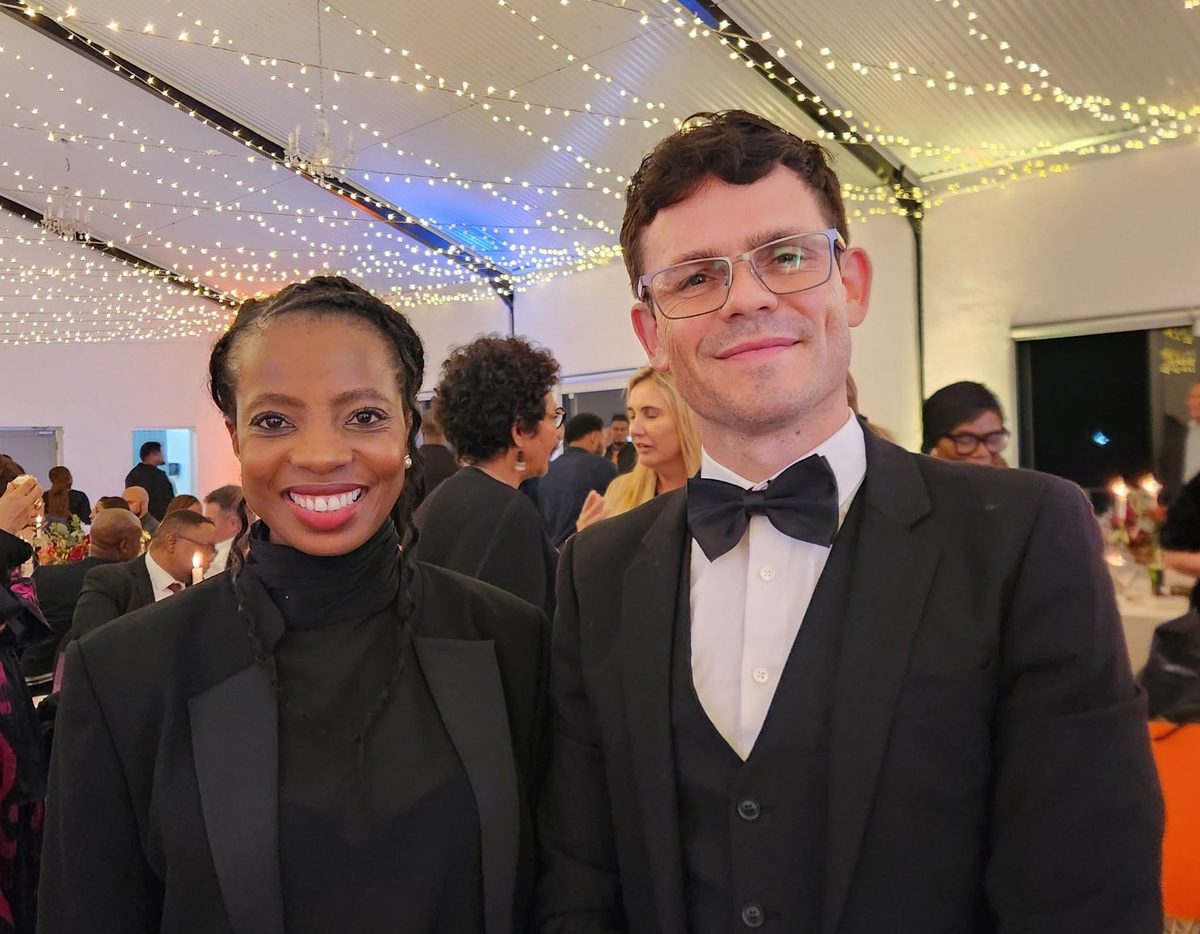
This is an interesting organisation shared with me by my industry colleague, Sharon Knowles… and you might want to know about them too.
The Basel Institute on Governance (https://baselgovernance.org/) is a respected Swiss non-profit working on anti-corruption and money laundering, with increasing activity in environmental crime, crypto, and AI tools, including here in South Africa.
Here are four interesting nuggets to chomp on:
Green Corruption programme
Covers wildlife, forests, critical minerals, carbon markets, and prevention through automation.
Tech
The Institute is part of FALCON (https://baselgovernance.org/project/falcon-ai-anti-corruption), an EU project building AI anti-corruption tools like crypto anomaly detection and procurement red flags. They also run free online courses through Basel LEARN (https://baselgovernance.org/basel-learn).
Africa and South Africa
They’ve trained 2,100+ officers across Africa, with experts in 7 countries. They also have a Siemens-funded project on business-integrity “collective action” in South Africa and co-ran Business Integrity Week Africa in Johannesburg in September 2026.
Asset recovery
The Institute worked on 100+ cases in 2025 and recovered US$65.2 million, including helicopters held in South Africa!
Learn more at: https://baselgovernance.org/
ECO ALERT
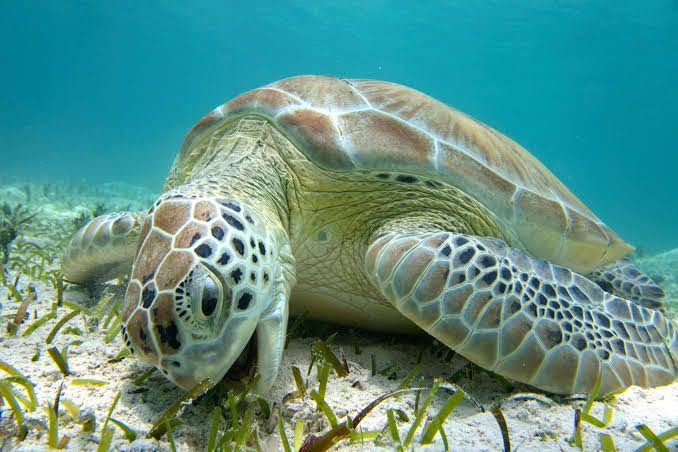
Today I have an Eco Alert for South Africans!
This warning comes from the first-ever global assessment of coral reefs under the IUCN Red List of Ecosystems, released in late October 2026.
So what’s happening?
The main culprit is climate-driven heat stress, particularly marine heatwaves.
The bleaching cycle
When water temperatures rise too high, corals expel the colourful algae (zooxanthellae) living in their tissues. This turns the coral white (bleaches) and leaves it starving. How sad is that…
Lack of recovery time
Reefs historically recovered over several years. Now, frequent marine heatwaves are killing corals before they can heal.
Local aggravators
Ocean warming is the main threat, but overfishing, coastal development, ocean acidification, and pollution weaken reefs further.
Impact on us
1. Decimation of marine life: Reefs support 25% to 30% of marine life, acting as nurseries and shelters. Their collapse could drive many species to extinction.
2. Threat to global food security: Over half a billion people rely on coral reefs. Their loss could cause local fisheries to collapse, leading to food shortages.
3. Loss of natural coastal defence: Coral reefs absorb up to 97% of wave energy, protecting shorelines. Without them, there’s increased erosion and storm damage.
4. Economic ruination for coastal nations: Reefs generate billions through tourism and fishing. Their decline could devastate local economies dependent on these industries.
South Africa has two beautiful coastlines with tremendous biodiversity. Each country has to play a part in protecting our oceans, because it does affect us on land! If we don’t work together, in a few decades, this problem is going to become a crisis. Let’s work together, Future Thinkers, to protect our precious reefs and oceans! … and the way to do this – resist the future use of fossil fuels and carbon-intensive services and products.
You can learn more here: https://iucn.org/story/202610/red-list-coral-reef-ecosystems
370 NOVELS
Do you work in the publishing industry?
Well then, this nugget of news is for you.
Coral Hart (a pseudonym) has made R16.55 million in less than 2 years using AI to write 370 romance novels. I believe she lives in Cape Town.
Listen carefully now… there is no doubt in my mind that the threat to creative industries by humans who use AI is extremely high.
And yes, it’s the humans that are the problem here… we don’t yet have AGI, so no AI is going out and producing its own love novels because it was once heartbroken.
A GOOD NEWS STORY
A good news story for today from Africa – involving two of my favourite things: tech and humans!
The Gambia has officially deployed its first ever blind magistrate, Magistrate Muhammed Krubally, to bench a judicial system explicitly built for the sighted.
To navigate a very paper-heavy environment (aka court), Krubally uses assistive technology like JAWS screen-reading software to listen to legal documents, and AI-powered smart glasses to independently execute administrative court tasks.
A TRENDY WARNING
To automate mundane tasks, a growing number of us humans have been “voluntarily” handing over our actual online banking credentials to unvetted AI assistants!
The “trend” epicentres around “Agentic” Shopping and Budgeting – subjects for a post another day.
Now, I won’t get into the lack of human intelligence in this trend, but rather what has happened as a result.
Major retail and commercial banks worldwide, including institutions in the good old USA and also here in South Africa (Absa, FNB, Capitec, and Discovery), have issued an urgent warning.
Basically saying: “Sharing usernames, passwords, or PINs with third-party AI agents is a severe security violation and can leave you legally liable for any financial loss.”
Some banks are doing more, and shifting towards Read-Only Open Banking API Bridges. Instead of giving AI your actual password, banks are routing data through approved, heavily sandboxed secure intermediaries that grant AI tools read-only rights to view transaction histories, without any ability to execute transfers.
Banks are also developing proprietary banking AI, actively building their own internal, native AI assistants (such as Discovery AI or FNB’s internal AI frameworks). Because these assistants operate inside the bank’s pre-existing secure environment, they require human biometric authorisation (like Face ID) or multi-factor confirmation for every single action the AI prepares.
AFRICA CAN’T WAIT
Future Thinking… this time by some Faith Leaders who have united in Kenya.
Some Change Champion faith leaders in beautiful Kenya have formed a coalition to demand transparent tracking of international climate funding. I love this so much!
The group is operating under the “Africa Can’t Wait” campaign, and has members from Christian, Muslim, Hindu, and indigenous traditions. Proving again that progress is possible when you focus on what you agree upon and not what you don’t!
INVESTMENT GRADE
Some economic news.
Our Finance Minister Enoch Godongwana has recently shared some exciting news for us all. Our country is on track to regain its investment-grade credit rating by 2028!
But what does this mean for you and me? A few important things…
Currently, SA spends around R1.2 billion daily (yes, you read that right) on national debt interest, consuming over 22% of tax revenue. A better credit rating will cut these costs, releasing funds for vital sectors. (Let’s hope this doesn’t excite our officials to borrow even more in our name!)
Then, with reduced debt-servicing costs, billions can be redirected to rejuvenate infrastructure, enhance policing, and improve healthcare and education without drastic tax hikes.
An investment-grade status will attract foreign investors, strengthening the Rand. This helps keep imported goods affordable and eases inflation pressure.
Reduced macroeconomic risk encourages businesses to expand operations, creating jobs and fostering long-term economic growth.
This is a promising green flag for stability and growth.
The END!