Don't like to read? Here is an audio version of this page. This is an AI reader.
The very big family photo.
I study all things that influence our society and there is no university that offers this course. Everything I write about comes from unending hours of my time, which I have given in the pursuit of understanding why people do what they do and to try and share information that inspires people to try new ways of running their homes and businesses with a moral compass as its foundation.
To be part of the solution to the challenges we face, we cannot focus exclusively on making money, politics, or our own immediate family interests. I want you, dear Reader, to know that I have no university degree and all of this is done as my side hustle. I too have a business I run and a family to take care of. I will never tell people how to live and work, but hope to set an example that inspires people to see that there might actually be another and better way. There is a bigger picture.
The concept of an ecosystem has been around since the 1930s and ecology is probably one of the most diverse scientific fields with so many disciplines involved. To name a few: chemistry, geology, climatology, genetics, and the list goes on. One could say it is the ‘M Theory’ of studies. An ecosystem is a community of organisms interacting with each other and their physical environment. Humans are part of numerous ecosystems because we move about so much.
People are not the most important animal in any system. In fact, there isn’t a single most important animal or plant in any given ecosystem because each species plays a unique role and is dependent on others for its very survival, but each system will have a few keystone species that are crucial and perhaps even unique to that system, and these species will play a prevailing role and have a significant influence on the overall ecosystem’s structure and function. Some examples of such species are bees, wolves, elephants, and cute little sea otters.
As a Future Thinker and Change Champion, I study all things that influence nature, business, and our technology. I have identified one major hindrance in our progress in deciphering ecosystems and it is religion. This is especially evident in the Middle Ages where the notion of evolution was a taboo topic, with faith leaders who were adamant on teaching that everything was created by God, and that there was no mathematical or scientific involvement at all. Today, ‘evolution’ is still heavily contested by religious fanatics. I have personally been stopped by an elderly lady who managed to talk to me for almost an hour at a Mugg and Bean coffee shop. I must say, she was an excellent salesperson and if things were different I would have hired her for one of my businesses.
That day, she was peddling the notion that the Old Testament and the entire process of creation had taken place over a few days a couple of thousand years ago. She would not entertain any feedback from me that life might very well have started 4 billion years ago. There can be a middle ground between science and religion, and I don’t see why they can’t both exist. There have been some influential faith scholars. A good example is the monk Mendel, who in 1866 first recorded genetic inheritance, using vegetables (garden peas) in his own experiments.
Evolution has to do with the mutation of cells (which happens naturally through cell replication, or damage to cells through radiation or environmental factors), these mutations either improve or decrease the chances of survival. Today, every animal and plant has come from a line of ancestors which branched off in several directions.
I want to share the story of evolution based on the best available scientific information we have today. As I mentioned before, I write based on my research and I come across conflicting information from time to time, so this is my disclaimer that while there might be inaccuracies in some of my writings, they are for the most part spot on and based on the best available information I had on hand at the time of preparing my work.
We can track ‘the first life’ back to approximately 3.5-4 billion years ago using fossil evidence of single-celled organisms like archaea and bacteria. However, you would not have known these things were life even if they were sitting on the floor right in front of your eyes. Life as we commonly recognize was first evident around 550 million years ago in the sea. Plants came a little later, around 470 million years, and finally animals on land around 360 million years ago.
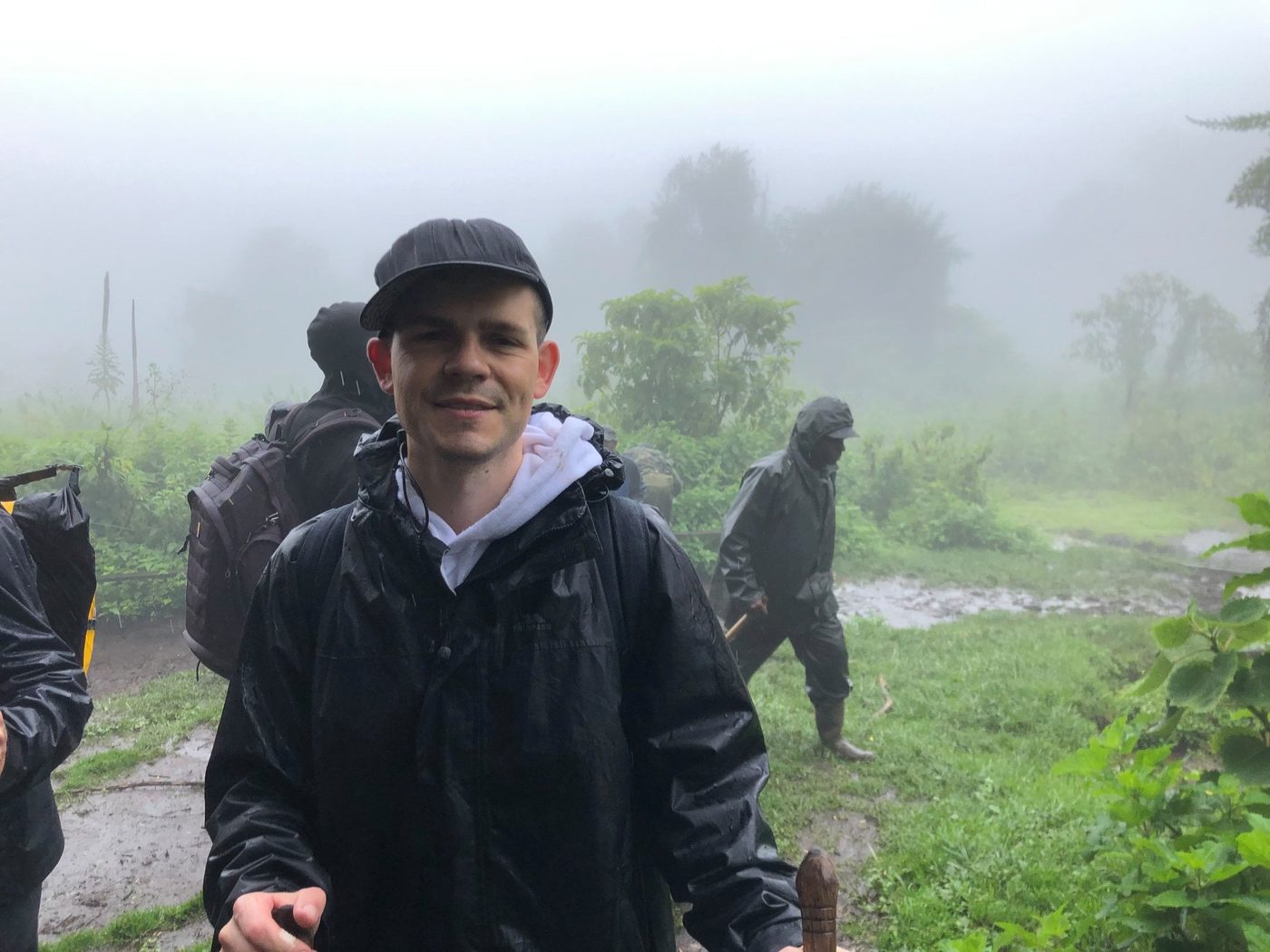
There is a scattered line of ‘human’ evolution starting around 2.8 million years ago, but ‘people’ as we recognize today (physically) only really appeared around 300 000 years ago. The evolution of ‘us’ was not simple and we almost became extinct around 74 000 years ago due to a natural disaster and a super volcano called Toba. I am fascinated by volcanos and I have climbed one between Rwanda and the Congo called Bisoke Mountain, and by the time you read this story would have also visited the largest active volcano in Europe called Mount Etna which is in Sicily in Italy.
I study natural disasters and I can tell you that life on Earth had to restart many times over because it experienced many extinction-level events which decimated entire ecosystems and changed global weather.
Every person today has a DNA lineage that includes DNA from a small group of people who survived the Toba disaster, their ancestors populated the rest of the world. We are literally all Africans, and an article written by me and worth reading is called ‘Africa Colonized the World’.
The choice to use the word “Colonized” in the title is explained in the article. You can also find the addendum to the article called ‘All About Us, the Information Pack’, which offers a mind-blowing summary of the people of Africa, those who stayed, those who left, and those who came back again.
Way back in the old days, a lot of our understanding of ecosystems and evolution was determined through the study of food chains and fossils. As technology improved, our avenues to learn increased. Microscopes were one of the most useful technologies in the old days; unfortunately, there was no camera to record what was being viewed, and everything had to be hand-drawn. The recording and naming of species in the old days was a very important job.
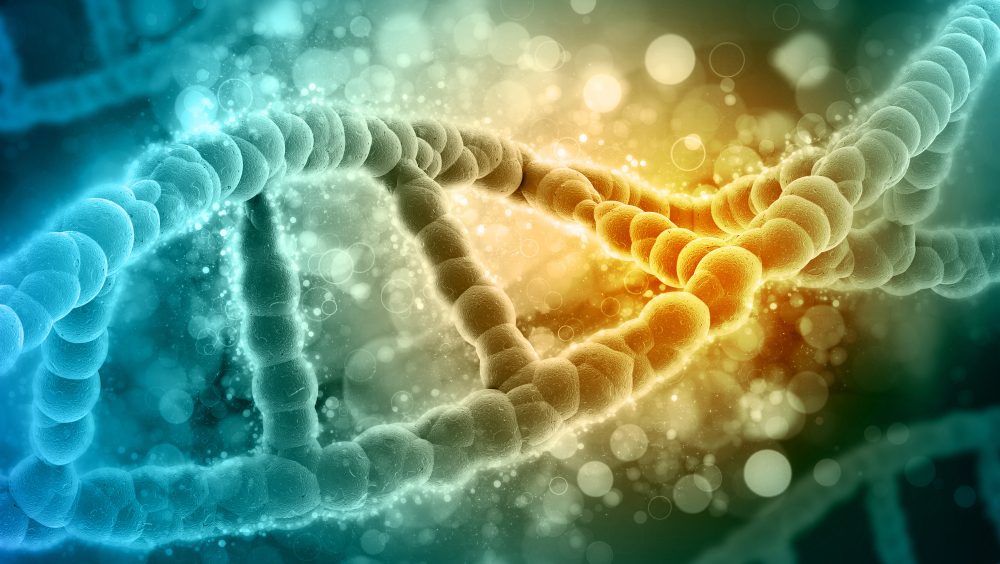
DNA, in my opinion, was a pivotal discovery for humankind because it is something all living things have. It links us; it is the link, and it is the story of life. It is the equivalent of what we call Blockchain technology. The ‘discovery’ and concept that DNA carries genetic information happened over time, and scientists like Friedrich Miescher (in 1869), James Watson, and Francis Crick, and Rosalind Franklin all played a part (early 1950s) in the story of DNA. James and Crick made their announcement in the Eagle pub, claiming they had “discovered the secret of life”. I assume most people just thought they were sloshed.
DNA stands for deoxyribonucleic acid. DNA sequencing is the process we use to compare the DNA of living things, using base pairs which resemble a barcode on a PC screen. There is a similarity of between 97% and 99% of our comparable DNA with great apes. Chimpanzees, Bonobos, Gorillas, and Orangutans are all genetic relatives of ours. Genuinely understanding this fact and accepting it should make you question the very meaning of ‘what it is to be human’.
Scientists estimate that only a small percentage of our human genome (less than 25) contains genes that code for proteins. The remaining portion referred to as non-coding DNA or junk DNA has, as far as we can tell for now, only regulatory functions that we are still trying to understand.
As wonderful as we think our technology is, there is still more to learn than we already know. What is certain is that all living organisms share some degree of DNA similarity because of universal genetic code shared from evolutionary history. Ecosystem are family. All life on Earth is related; we are all children of Mother Nature and of this planet.