
A BEDTIME STORY FOR US ALL
DON'T LIKE TO READ?
A New Friend.
Dear Reader, I would like you to meet someone very important, and too often ignored: please meet “Mother Nature.”. Perhaps you imagine her, or him, as jolly, plump, clever and a rather old character? The truth is we are part of Mother Nature, but we have forgotten this fact. True too, and perhaps less known, is that there is an undeniable link and remarkable similarity between nature and our own technology. It is a fact that many of the things we invent are recreations of Mother Nature’s own work.
There is so much we still don’t know, but in spite of our own naivety, nature continues to influence our lives, homes, businesses, and even our works of art and the technology we are so proud of. Where do we start to learn about our new friend?
Perhaps with the Gaia Hypothesis? This idea proposes that the planet Earth is a super organism, and humans (and our technology) could be seen as a type of illness by the Earth’s body. This supports the idea that global warming (like a virus) is the planet’s way of running a fever to get rid of us, basically an autoimmune response.
I do not subscribe to the idea that the world has a higher consciousness and wants to be rid of us all, but we are definitely misbehaving enough to upset every section of the planet. What went wrong? Well, at some point we decided we are a supreme species, separate and above the environment. Why we did this is perhaps best answered by a psychologist, but nonetheless we have formed an ill fabricated perception of elevation above the ecosystem. We have a majesty complex. This has gone on for too long. We have developed a bogus reality and are mistakenly confident that our behaviour is acceptable. Modern humans no longer teach children how to be natural beings. We have in many ways regressed our mind-sets while trying to progress things like our economy and cities.
I won’t deny the wonders of humans. Really, we are a wonder. We should all take a moment and look at some of the achievements we have made. We don’t do this often enough, and a bit of self-reflection should be part of something all of us do, and try to avoid fixating on the negative. However, we must be mindful that there are many things other animals and plants do better than us.
If supremacy were based on lifespan, a species that has done well at actually living for a long time, then the red sea urchin would kick our butts because it is able to live for 200 years, or The Great Basin Bristlecone Pine, still alive today and about 5000 years old. Our global average lifespan is only about 73 years old.
~
There are scientists in Australia’s national science agency who have created a genetic ‘clock’ computer model that estimates how long different vertebrates can survive based on DNA. They say humans have a maximum natural lifespan of 38 years. It is only because of our technology and innovation that we live longer.
With that said, we should be able to live up to about 120 years if we take into consideration the maximum number of times a human cell can divide (known as the Hayflick limit), which at a push is 60 times. So why don’t we? Well, things like stress, pollution, and a bad diet don’t help; I can tell you that much!
If omnipotence were judged in terms of population numbers, humans would lose here too. Bacteria come up tops with an estimated 4 nonillion (this is a real number and a lot more than a billion) alive in the Earth’s ecosystem. There are so many of these microscopic critters that their biomass matches that of all the people on Earth, in spite of only weighing approximately 1 picogram each.
I think the only thing us humans can claim makes us ‘better than other living things’ is our intelligence, but then again, if we are so smart, why do we do so many harmful things? The runner-ups in the category for intelligence are Chimpanzees, Dolphins, Elephants, Crows, Ravens, Parrots, Mr. Octopus, and even Piggies. Many of these animals’ attributes include high levels of memory, empathy, problem-solving skills, and advanced communication, and in some ways, they surpass us in these areas.
I subscribe to many of the points found in the theory of natural selection by Charles Darwin. A lot of what sparked his line of thought stemmed from a study of bird beaks on an island way back in 1859. In order to demonstrate and explain the relationship, link, and similarities between technology and nature — not only in the inventions of humankind but also through our tools, purpose, and execution — I first needed to delve into what nature actually is. This was a personal journey I undertook as a business and environmental technologist.
~
None of us can truly know ourselves without understanding Mother Nature. Understanding ecosystems is vital to comprehend just how nature reacts to mankind, our technology, and also our influence on Climate Change. At the time I started to write this chapter, I was reading a book by Stephen Hawking, in which he explains the rule of law of nature, which in many ways is worked out mathematically. I must admit, even after re-reading some of his points, I still do not fully understand all of his explanations. He was such a clever bloke.
What I, and you, can take from Stephen’s book is that there are four primary theories covering energy/forces in our universe (observable and assumed), and there is an undeniable mathematical process in nature. Mother Nature is a remarkable Math and Science Teacher, if we actually attend her classes. Debates will continue (I hope), but I am content to know we have something called “M Theory” which covers most of what we know, and that there is a very strong chance of our universe being one of many in the multiverse. Each and every universe (or version thereof) subscribes to the law of nature, which, by the way, can vary depending on the universe. (None exist where pineapple on pizza is okay.)
We very often build something using a concept nature invented during the process of evolution. There are countless examples of how we have copied or emulated nature to build machines. For example, the wings of a plane are styled from the wings of birds. Swarm Robotics is another.
Throughout the ages, we have been inspired by a desire to explore and understand; unfortunately, we do this through a looking glass of superiority. This creates a colossal problem. Ego and greed are characteristics humans have almost perfected. They have been so detrimental and harmful and can be found in just about any of our root causes of problems. We genuinely are convinced that we are the most important things alive. In our argument, we will share select scientific facts, and some will even use religion.
Have you ever heard a bird ask why the sky is blue or a fish how it can breathe underwater? It never happens. Our understanding of the environment is the reason humans became the dominant species on earth, but could also be the reason we destroy more than we build. We have a tremendous responsibility, and it’s important to recognize our potential for good and bad.
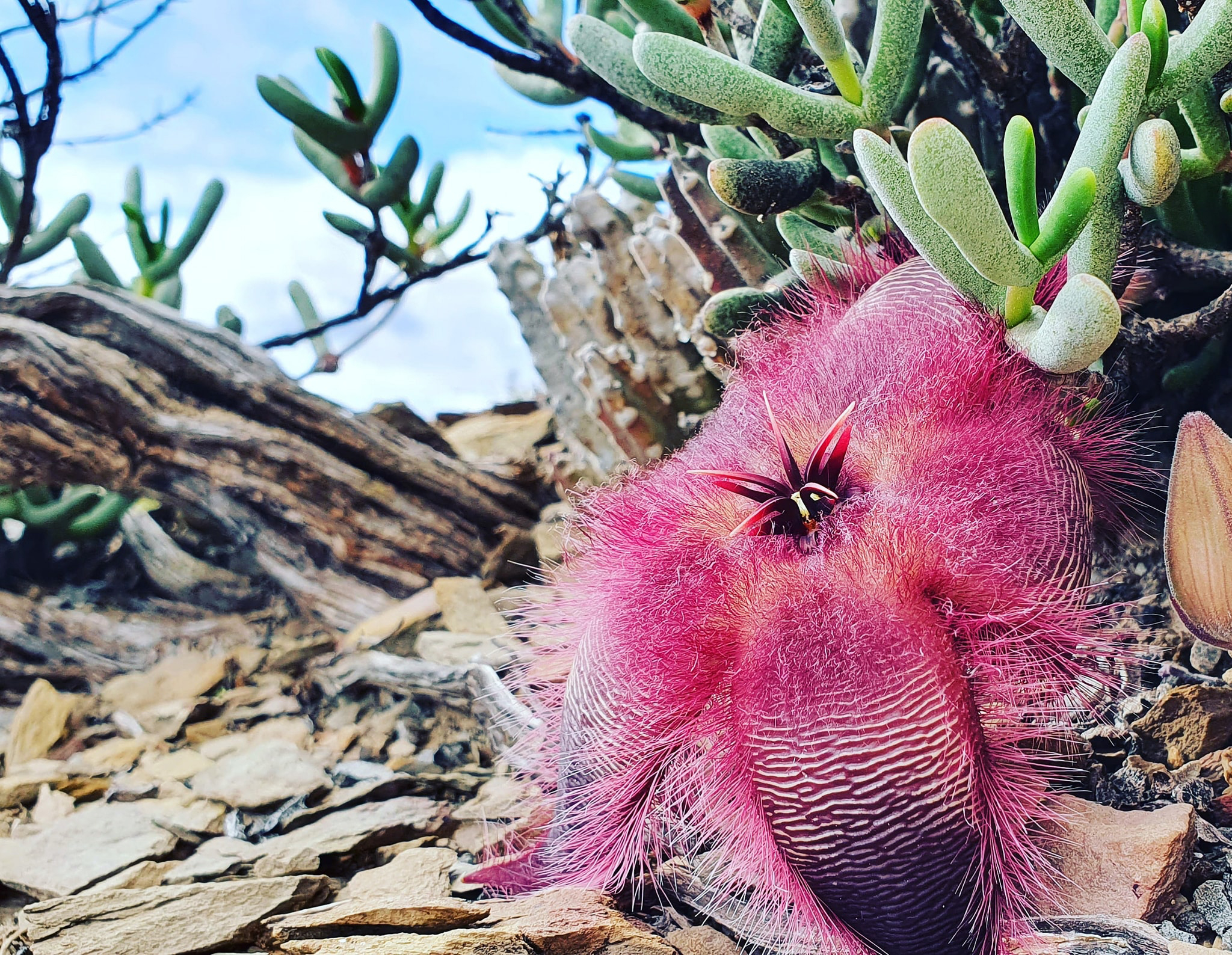
As a species, or even as the category of mammals, we are actually a minority. There are around 8.7 million types of animals and plants on Earth, and we discover new ones every day. Unfortunately, about 150 species of living things are estimated to become extinct every 24 hours. Please read that last sentence again. You can fact-check this point if it sounds too scary to be true. I want you to ask yourself how many of these species were affected by us and Human-induced (anthropogenic) Climate Change. The phrase ecocide really is an apt description of what is happening right now.
The way we have lived and worked to date is not sustainable, nor ethical. We need to find and pursue better ways to advance. No other creature seeks explanations more than we do; after all, when was the last time you heard a bird ask why the sky is blue or a fish how it can breathe underwater? It never happens. Our understanding of the environment is the reason humans became the dominant species on earth, but could also be the reason we destroy more than we build. We have a tremendous responsibility, and it’s important to recognize our potential for good and bad.