
Heritage Day and South Africa’s Natural Heritage (September 2026)
HERITAGE DAY IS NATURAL.
First published in 2026
DON'T LIKE TO READ?
Celebrating?
Taking a day off work, maybe on the beach, braaing, or did you just sleep late?
Good for you – you deserve it!
‘Heritage’ is the ‘story’ you are custodians of. Understanding this story and then writing your chapter and legacy into this book to pass onto the next generation is the very best way to celebrate Heritage Day. Deciding to become an author of heritage is so critical, and I don’t want you to be derailed by other people’s opinions on what is most important. Some might say it is our Constitution, our spirit of Ubuntu, or our Cultural Diversity.
All good things of course, but we often get bamboozled between the ‘message’ and ‘characters’ of a story. No character or personality will be featured throughout the book of Heritage. “Listen properly” now… Only two things will endure: our natural environment and our ability to tell stories.
Heritage Day (as in the public holiday) is meant to bring our divided nation together by highlighting our diverse cultures, shared history and unique identities. These all deserve to be celebrated indeed! We have so many valuable traits, and also so many whimsical and lekker ones, if you know it’s not inside it’s on top.
Celebrating is not creating. It’s our job to write a chapter. It might be opportune then, that I am on Heritage Day writing about the future of our heritage.
Today, I am learning about the new draft National Biodiversity Strategy and Action Plan 2026–2035 (NBSAP). Yes, I know this might sound like an odd thing to be doing on such a day, but it is actually the perfect thing for me to be doing. I am able to put fingers to keypad and share the most important notes on this bit of pending legislation with you, passing on information which will become part of your heritage and chapter. As always, I’ll try keep it concise and interesting.
The NBSAP is not a regulatory act itself but rather a ‘consequential policy’ guideline that directs how we will protect, manage, and sustainably utilize our natural resources over the next decade – and 10 years is a big chunk of your life. The documents core components and strategy are to serve as a blueprint to halt and reverse biodiversity loss. It is relevant to your home and office, and meant to be a national mechanism to align our domestic policy with the United Nations Convention on Biological Diversity (CBD) and the Kunming-Montreal Global Biodiversity Framework (GBF) – all very important policies as well.
The plan moves us towards a ‘whole-of-government’ and a ‘whole-of-society’ approach, using a clearer theory of change, targeted indicators, and dedicated monitoring systems to try and address previous implementation gaps. Of course, we need social buy-in, which is why understanding, accepting and enacting are critical. You reading this is step one so well done!
The draft outlines regional targets which include a proposal to conserve 21% of South Africa’s terrestrial and freshwater areas and 20% of our marine areas by 2035. This percentage is low if you consider that is all we ‘giving’ to the rest of life while we use the balance. (Maybe we can learn from Costa Rica & Bhutan who protect between 25% to 50% of their total land area already?)
There are three Interconnected Governance Pillars to manage our natural heritage. The first is the NEMBA (Act 10 of 2004), an underlying legislative and regulatory act offering statutory powers. Then there is the NBSAP, a 10-year overarching strategic vision and action roadmap. And the final pillar, is the National Biodiversity Framework (NBF) an operational mechanism used to translate the NBSAP strategies into day-to-day administrative and management actions.
The draft National Biodiversity Strategy and Action Plan (NBSAP 2026–2035) has a significant shift from the old 2015–2025 plan which I would like to quickly unpack for you. “Listen carefully” now…
The Old Plan (NBSAP II: 2015–2025) is based on the former UN Aichi Biodiversity Targets, which were largely unmet due to inadequate tracking. Our new revision (NBSAP III: 2026–2035): is aligned with the Kunming-Montreal Global Biodiversity Framework adopted in 2022.
The Old Plan focuses on state-managed reserves and national parks. The new strategy is going to use the Biodiversity Stewardship Programme to secure private and communal lands.
The Old Plan primarily managed by environmental agencies with limited external integration, the new Plan promotes a comprehensive approach, integrating biodiversity goals across municipal planning, agriculture, and commerce.
The Old Plan had limited metrics, leading to implementation gaps, and the new plan features standardized metrics, clear indicators, and monitoring systems to report progress to the UN Convention on Biological Diversity (CBD).
The gazetted draft is available for public review and I will be submitting mine via nbsapcomments@dffe.gov.za once I complete this article, adding my voice to public interest groups, including the Biodiversity Law Centre and WWF South Africa, who have actively debated the draft. Let me unpack some of my points now.
We will start with the salt and some constructive criticism. There is a sentiment by many about a lack of ambition. The global GBF target aims to protect 30% of the world’s land and sea by 2030. However, our proposed targets are insufficient and lagging at least five years behind the international timeline. Conservation organizations, including WWF South Africa, have expressed concerns and I add to their voice now. With this sort of lax target in mind, what sort of legacy example are we writing in our chapter? Change one to the draft, increase this target. We cannot continue to prioritize commercial activities over ecological protection and animal welfare, favouring commercial wildlife economies and legal trade. Groups like the Biodiversity Law Centre and the Southern African Faith Communities’ Environment Institute (SAFCEI) have warned (and we should hear their voice) that the plan’s reliance on voluntary compliance, without converting strategies into strict regulatory laws, is a significant weakness. The next change to the draft needs to be tiered mandatory compliance.
Time for a little sugar and a look at the other side of the same coin. Some positive feedback I can share is that unlike previous frameworks, the DFFE has done a better job engaging a wider range of stakeholders, including traditional leaders, health practitioners, youth groups, and local communities, in shaping the draft.
This is a good paragraph we have written into our heritage chapter. There has been a focus on Socio-Economic Benefits, and some have praised the recognition of biodiversity as a valuable economic asset, equitable benefit-sharing, and job creation, rather than isolating conservation efforts.
Can we start to think about some positive change in the future? Let’s try…
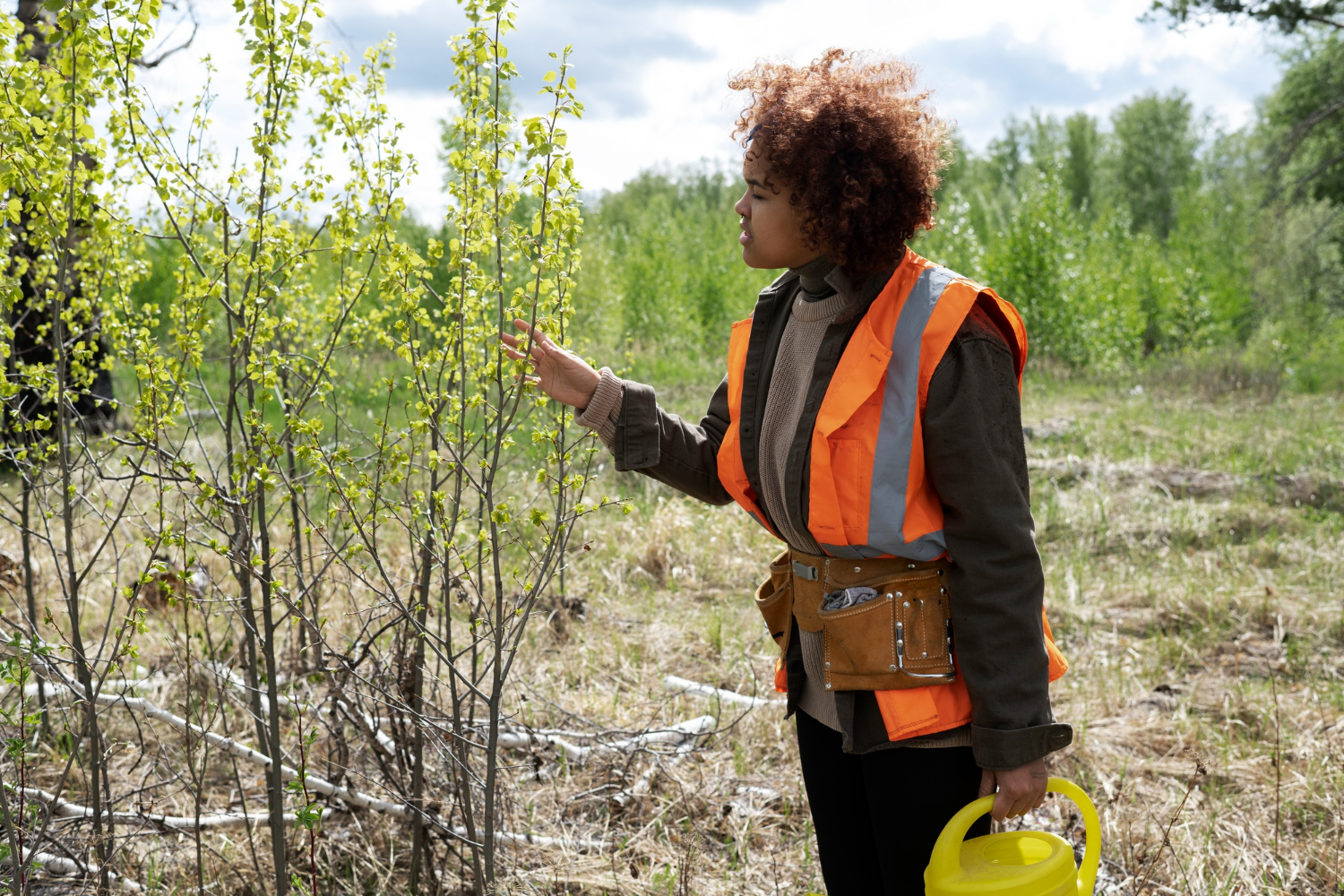
If this new strategy is adopted, several operational changes could happen. We might see the expansion of community and private conservation, instead of acquiring costly land for national parks, the state might implement tax incentives and protections for communal and private landowners through Biodiversity Stewardship agreements – I love this idea so much and this is certainly a project I would like to be involved with.
We might also see better mitigation of human-wildlife conflict because the plan introduces localized programs aimed at promoting sustainable coexistence between humans and wildlife, focusing on protecting rural communities near major game reserves. We also need to work on re-introducing natural spaces into our urban towns (homes, offices and public areas) – and another change to the legislation must be that we make provision for this.
A green flag would be securing genetic materials and indigenous knowledge. Verification systems can be established to help when local plants (e.g., Rooibos or Aloe) are used commercially abroad (or even in Space – see my post / article: ‘Rooibos in Space’), the genetic materials are protected, and financial benefits are returned to the indigenous communities with traditional knowledge.
Based on the official review of the previous 2015–2025 NBSAP II, our country achieved only 5 out of 22 strategic outcomes, we can reasonably make some assumptions on what the state will get right and wrong, and to this effect, let me share some scenarios:
(The Successes). What We Will Likely Get Right – South Africa really does boast world-class scientific capacity and strong historical momentum in specific environmental sectors. The new framework will likely achieve success in the following areas because of this.
Foundational Science & Spatial Mapping. Our scientific foundations are exceptionally robust. Through institutions like the South African National Biodiversity Institute (SANBI), our country excels at compiling comprehensive National Biodiversity Assessments (NBAs). The outcome is that the state will likely succeed in mapping out the exact locations of Critical Biodiversity Areas (CBAs) and Strategic Water Source Areas. We will know more or less exactly where the ecosystems are under threat. We must into legislation emphasis the use of technology like AI to aid us.
Next is the growth of Private and Communal ‘Biodiversity Stewardship’. Past performance demonstrates that the state cannot afford to buy massive parcels of land for traditional national parks. However, South Africa’s Biodiversity Stewardship Programme has been highly successful. By leveraging tax incentives and working with private game reserves, agricultural landowners, and communal trusts, our country will likely expand its network of ‘Conservation Areas’ quite nicely and without over-relying on the state budget.
Finally, monetising the ‘Biodiversity Economy’ – (with exclusion of things like hunting for sports which is a preposterous archaic capitalist activity that needs to be shot dead itself). South Africa has historically been highly successful at establishing framework models for access and benefit-sharing (such as the historic Rooibos industry payout to the Khoi and San communities). Because the 2026–2035 framework places a massive emphasis on economic returns, our country will likely excel at structuring bioprospecting deals and formalizing the wildlife economy, ensuring local rural communities receive legal payouts from the commercial use of indigenous natural resources. Another change to the draft is to better explain the mechanism and access to empower ‘good business’ and change champions to get involve here.
Time to poke the bear!
(What We Will Likely Get Wrong?) Historically, South Africa’s primary environmental shortcomings stem from fragmented governance, poor monitoring, and systemic resource shortfalls. The less control the government has, and the more independent bodies are involved, the better – therefore another change to the draft is for something to be created that addresses this critical need.
Society in the coming years will need to deal with fragmented intergovernmental oversight. Environmental protection in South Africa requires tight collaboration across multiple state entities. The DFFE dictates policy, but municipal authorities control zoning laws, and the Department of Mineral Resources and Energy (DMRE) issues mining permits. Municipalities and the DMRE do not have a good track record of serving mother nature or our natural heritage. Needless to say, and in my opinion, the ‘whole-of-government’ target will likely falter. (In the past, the DMRE has frequently granted prospecting or mining permits inside high-priority ecological corridors or crucial catchments, completely undermining the DFFE’s conservation plans). The local elections will have a major impact on this plan.
My next concern is that while major terrestrial national parks (like our wonderful Kruger) receive funding and global prestige, South Africa’s freshwater and estuarine zones are historically neglected, under-policed, and heavily impacted by collapsing local municipal sewage infrastructure, so while the draft sets clear targets for freshwater systems, localized pollution, illegal fishing, and agricultural runoff will likely outpace enforcement, causing these specific ecosystems to fall well short of their 2035 recovery goals.
Finally (for this article anyway), we will need to confront the accountability and monitoring gap. In the DFFE’s own evaluation of the previous decade’s policy, the absence of consistent, standardised monitoring meant that the status of 14 key outcomes remained unverified or entirely unknown. Responsibility was dispersed across too many agencies, with few clear consequences for failure. The new revision does attempt to address some problems by reducing the framework to 23 focused metrics. However, municipal environmental management inspectors, popularly known as the ‘Green Scorpions’’ remain drastically underfunded. This is an area where business can act as a catalyst for positive change by directing a portion of their community-investment and social-responsibility funding towards local environmental monitoring, environmental education, municipal enforcement capacity, restoration projects, and community-based conservation.
I would like to see criminal prosecution added to legislation for failure to deliver.
We now arrive at the end of my article, and a final question to put forward to you: “If South Africa’s natural environment is globally recognised as one of our greatest assets and inheritances, why do we not place it at the centre of our national priorities and heritage celebrations?”
The Cradle of Humankind in Gauteng is one of the world’s richest concentrations of hominid fossils and the Barberton Greenstone Belt preserves some of the oldest geological materials on Earth. South Africa is one of the world’s 17 megadiverse countries and contains an extraordinary proportion of the planet’s biological diversity. Millions of us depend directly on healthy ecosystems for our daily work. Nature is not an optional luxury or a distant wilderness.
Our landscapes provide shared spaces for healing, recreation, cultural practice, and spiritual connection. They transcend political and cultural divisions. Nature is irreplaceable, a living asset passed down to us by previous generations, it is the ultimate inheritance we owe to those who come after us.
My wish for you is that you enjoy your umqombothi, ‘own’ that Isidwaba outfit, and enjoy some chakalaka, but also to remember your true heritage and legacy is one with nature.
The END.
WANT TO READ MORE ARTICLES?
But wait, there is MORE!

Who is Jean-Pierre Murray-Kline?
Jean-Pierre is a South African serial e-entrepreneur, published author, and change champion who has worked in over 300 types of industries in some capacity or another. His own online businesses have generated millions of Rands and involved sectors such as law, web & app development, events & entertainment, property, technical services, media, and tourism.
He has traveled to over 180 cities worldwide and is extremely active as a business and environmental technologist. In addition to his own projects, he researches and consults on all things online: marketing, reputation, compliance, law, and e-security, and also offers strategy workshops and scenario sessions on future thinking with a key focus on technology, the environment, and global influences.
Jean-Pierre is often asked to be a guest speaker on a variety of subjects he continuously studies and writes about.
Disclaimer:
- While I attempt to ensure information is accurate and up-to-date at time of publication, I will not accept liability should information be used, and found to be incorrect. If you do see an error, please let me know.
- The links, images, videos and/ or text from this article are not necessarily under my direct management, ownership or care. Should you be the owner or manager of any content herein, and wish for the content to be removed, please let me know and it will be done.