
NUGGET (26 JUNE 2026)

Nuggets! (Bite size updates on the real important stuff related to Tech, Trends, Business and the Planet.)
DON'T LIKE TO READ?
We are just about to hit mid‑year 2026 and make our way toward the holiday season! Let me tell you, this first half of the year didn’t go as I had planned. Be that as it may, I continue to learn and adapt, and that’s why I have dedicated myself to lifelong learning and share some of those lessons monthly in these newsletters I call “Nuggets”. This is what I wish to share June:
A GOOD START TO JUNE.
On the 2nd of June, a major carbon credit registry, Verra (verra.org), officially certified a landmark initiative in the Province of Misiones, Argentina. I wish it had been in South Africa… but hey, it has to start somewhere!
So why is this important? This registry represents a green flag for me, a step in the right direction for global carbon markets. One might even say it’s the turning of a new leaf (pun intended), as it is the world’s first subnational government-led forest carbon program to achieve certification under Scenario 2 of Verra’s Jurisdictional and Nested REDD+ (JNR) Framework.
The first in the world!

The scale of the program spans approximately 3 million hectares, with around 1.5 million hectares of dense native Atlantic Forest located in northeastern Argentina. Over its initial six-year crediting period between 2017 and 2022, the initiative successfully generated neg 13.1 million tonnes of carbon dioxide equivalent (tCO₂e) in verified emission reductions! This program specifically protects the Paraná Atlantic Forest, a biodiversity hotspot that harbours over 52% of Argentina’s biodiversity, including species such as jaguars.
By demonstrating that public policy can effectively integrate with international carbon finance, experts believe the model will serve as a repeatable template for others. Let’s hope others follow!
Want to know what your business’s carbon footprint is? Well, reach out to me here:
https://www.jeanpierremurraykline.co.za/future-thinking/
NEED A NEW IPHONE?
…probably not. On that subject…
On Friday, 12 June, our Deputy Minister Bernice Swarts hosted an “E‑Waste Recycling Imbizo” and launched a pilot drop‑off site at Langa Community Hall in Cape Town. This initiative aims to tackle the fast‑growing problem of electronic waste: our phones, laptops, TVs and appliances, because we unfortunately live in a culture of replace, not repair (the same theory can also be applied to many reasons for divorce). The hopeful goal is to keep toxic materials like lead and mercury out of landfills and move them into a safer circular economy.
To encourage participation, people were invited to bring unwanted electronics and receive R4.50 per kilogram on the spot, but you had to have a valid South African ID, which is an odd requirement if you ask me. (Maybe you can email mvandiemel@dffe.gov.za and ask Merle why?)
The event also formally linked the City of Cape Town with legislated Producer Responsibility Organisations (PROs) and certified private recyclers to ensure collected items are processed to national environmental standards.
The Langa drive highlighted Newearth Recycling, which has diverted over 300 tonnes of e‑waste and created 17 permanent jobs. Langa is the 11th e‑waste collection/drop‑off point established nationwide since South Africa implemented Extended Producer Responsibility (EPR) regulations for electronics. Good stuff!

XENOPHOBIA IS TRENDING AGAIN.
I want to highlight one story (though there are many) that you might not know about and that I think is worth sharing. In June (and the time I wrote this), thousands of Malawian nationals had gathered at Sherwood Community Hall on Lockley Road in Durban, asking to be sent back to Malawi. This has happened because of anti-immigrant campaigns, threats of local violence, and an ultimatum from anti-migrant groups ordering undocumented foreigners to leave by June 30, which forced many people to flee. Many have abandoned jobs and homes in nearby informal settlements like Clare Estate.
The result is an estimated 6000 – 8000 people living in open fields and temporary tents, which has, of course, overwhelmed local services. Malawi is running a voluntary repatriation program, funding buses and prioritizing women and children; over 750 people have been returned so far.
There is so much hate circulating at the moment. I want to remind everyone that we are talking about families: young children and babies, sleeping in cold winter weather with poor sanitation, severe overcrowding, and heavy reliance on emergency aid, all because of fear and hate. There are better ways to address this, and we are missing the opportunity to do so.
ONE STEP FORWARD, ONE STEP BACK?
There is a renewable energy paradox in South Africa stemming from a geographical and infrastructural mismatch. Let me explain.
South Africa’s best wind and solar resources are in the Cape provinces, but Eskom’s high‑voltage transmission lines are concentrated near the coal fields of Mpumalanga. Seeing the disconnect?
Despite the Department of Forestry, Fisheries and the Environment (DFFE) drastically cutting bureaucratic red tape and fast‑tracking Environmental Authorisations (EAs) for projects totalling 4861 MW in record time, we can do nothing because of a grid‑locked reality. Eskom’s grid‑connection process moves much slower, if at all.
Grid capacity in the Eastern Cape, Western Cape and Northern Cape has been exhausted — like the battery on my TV remote — leaving private power plants legally permitted to be built but unable to connect to the national grid to supply electricity.
(It boggles my mind that no one scenario‑planned this transition. They really should have reached out to www.scenarioplanners.co.za ~~~hint hint.)
Where are we now? EAs are not permanent. They typically expire if construction does not begin within three to five years. If developers cannot secure a grid connection before an EA expires, they lose approval and must reapply from scratch. In other words, even if we have the chicken (the power producers), the egg (Eskom) still has to show up to the party — a very late egg, if any.
Then there are the banks. Financial institutions are unwilling, reasonably so, to release billions of rand for wind or solar farms if the developer cannot guarantee an Eskom grid allocation. This leaves projects stranded in “development limbo” and undermines our ambitions for a just energy transition.
Eskom estimates resolving this bottleneck will require building over 14000 kilometres of new high‑voltage transmission lines over the next decade. This rollout is projected to cost about R390 billion, and because Eskom cannot fund this alone, the government is working on regulatory frameworks to allow private sector participation (PSP) in building and managing the national transmission grid.
INNOVATION NEWS FOR MZANSI!
Our Road Traffic Management Corporation (RTMC) announced on the 16th of June that South Africa is moving toward a fully digital vehicle licensing system! The initiative will phase out physical paper discs in favour of electronic number‑plate recognition technology to eliminate the rampant black market for fake discs. Let’s hope this is rolled out faster than the analog‑to‑digital TV transition we’re still waiting on
NO, IT’S NOT NEW.
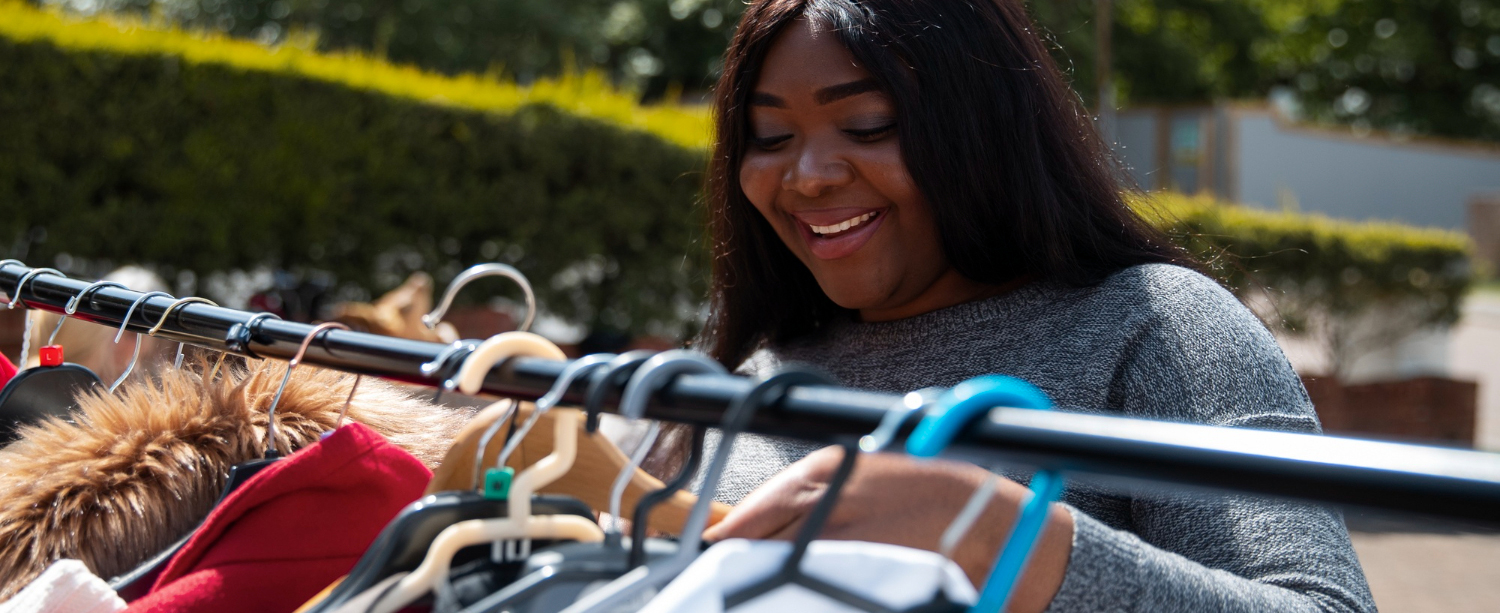
I’m very happy to be reporting on a trend I am very much into! Thrifting or “Pre-Loved” clothes shopping is apparently getting a level of luxury status. This is being driven by our tough economic conditions, but more importantly, by eco-consciousness!
High-end thrifting has evolved from a budget necessity into a major style status symbol, with platforms like Yaga and physical vintage pop-ups in Cape Town and Johannesburg dominating youth fashion culture.
Before you knock it, I want to make two points: 1. Some of these shops are getting really fancy and smell like perfume shops! 2. This trend supports the circular economy: gone must be the days when we wear things just for a little while, then dump and replace.
A bonus comment is that some of my favourite clothes are actually now from thrift shops!
To get going, here are some recommendations:
Cape Town & Surrounds
- Oasis Charity Shop: Connected Claremont stores featuring clothing, bric-a-brac, and books.
- Nevernew: Trendy Observatory spot for retro 80s/90s jerseys and Dr. Martens.
- Waiting for George: East City consignment boutique with unique festival wear.
- The Slow Fashion Collective: Observatory hub showcasing multiple online thrift brands together.
- U-turn Thrift Shop: Multiple locations selling quality clothing by the kilo for charity.
- Between Us Boutique: Somerset West store known for pristine, high-end pre-loved items.
- SecondHand Rose: Claremont landmark stocking premium local and international designer labels.
Johannesburg
- Vintage with Love: Birnam luxury pre-loved boutique funding national literacy programs.
- Thrift Vintage Clothes: Braamfontein favorite for authentic street vintage and denim.
- Bounty Hunters: Budget-friendly Melville staple for second-hand clothes and books.
- Second Chance Clothing: Massive, organized Roodepoort store with highly affordable fashion.
ENVIRONMENTAL NEWS
For the win! Yaas!
There has been a new policy announcement from our Minister, Willie Aucamp, who oversees Forestry, Fisheries, and the Environment, about some stringent legal measures against plastic pollution. Apparently, the era of “business as usual” is over for companies that do not adhere to environmental laws. Good!
One key element of this new policy shift is enforcement by the “Green Scorpions.” The government is said to be mobilizing the Environmental Management Inspectorate, commonly known as our Green Scorpions, to target companies that fail to comply. (I hope they also focus on SOEs as well.)
Strengthening Extended Producer Responsibility (EPR) is central to this new policy. It’s all about the rigorous enforcement of South Africa’s EPR regulations, which hold companies introducing plastic packaging into the South African market, including imported products, legally accountable for their items’ entire lifecycle, from design through to recycling!
LEGISLATION NEWS
Laws influence us greatly, and today I want to share news on the National Water Amendment Bill overhaul. Some major changes have been proposed in this new document to address the challenges of our water insecurity, but the item that has stood out to me the most is the proposed ban on private water trading.
The new legislation targets existing provisions from the 1998 Act that allowed water entitlement holders, such as commercial farmers, to transfer or ‘surrender’ their water use rights to third parties, creating a secondary market for trading these rights. Not too long ago, in 2023, there was a landmark ruling by our wonderful Constitutional Court, which confirmed the legitimacy of such monetization of this very important resource unless specifically prohibited by law.
The new Bill ‘fixes’ this by ensuring that any surrendered water entitlements automatically revert to state control (not that they have been the best custodians of it) and enables our government to redistribute these rights to serve the public interest and address historical discrepancies in water allocation. Entitlements can only be surrendered to facilitate one’s own license application on owned land, and temporary water transfers are limited to a maximum of 24 months.
There are severe penalties for non-compliance, with some violations potentially resulting in fines of up to R10 million and prison sentences reaching ten years, which seem to mirror the severity of punishment in the POPIA and Climate Change Act. It also imposes personal criminal liability on company directors and municipal managers who fail to prevent water offenses, marking a substantial shift in corporate governance and accountability.
LAND AND HOUSING
Details shared during the National Department of Human Settlements Budget Vote between the 26th and 27th of May exposed a significant gap in South Africa’s affordable housing delivery. Nowhere is this gap more evident than at the newly launched Somerlife Social Housing Project in Somerset West (which is very near me), which has become a case study in our country’s deep spatial inequality and mounting urbanization pressures. It’s worth noting a few details about it.
At the project’s pre-budget launch (I think I found it on video: https://www.facebook.com/watch/?v=1573776180929412), our Human Settlements Minister, Thembi Simelane, revealed that applications for Somerlife surged past 14000 and were tracking toward 15000 for phase one alone.
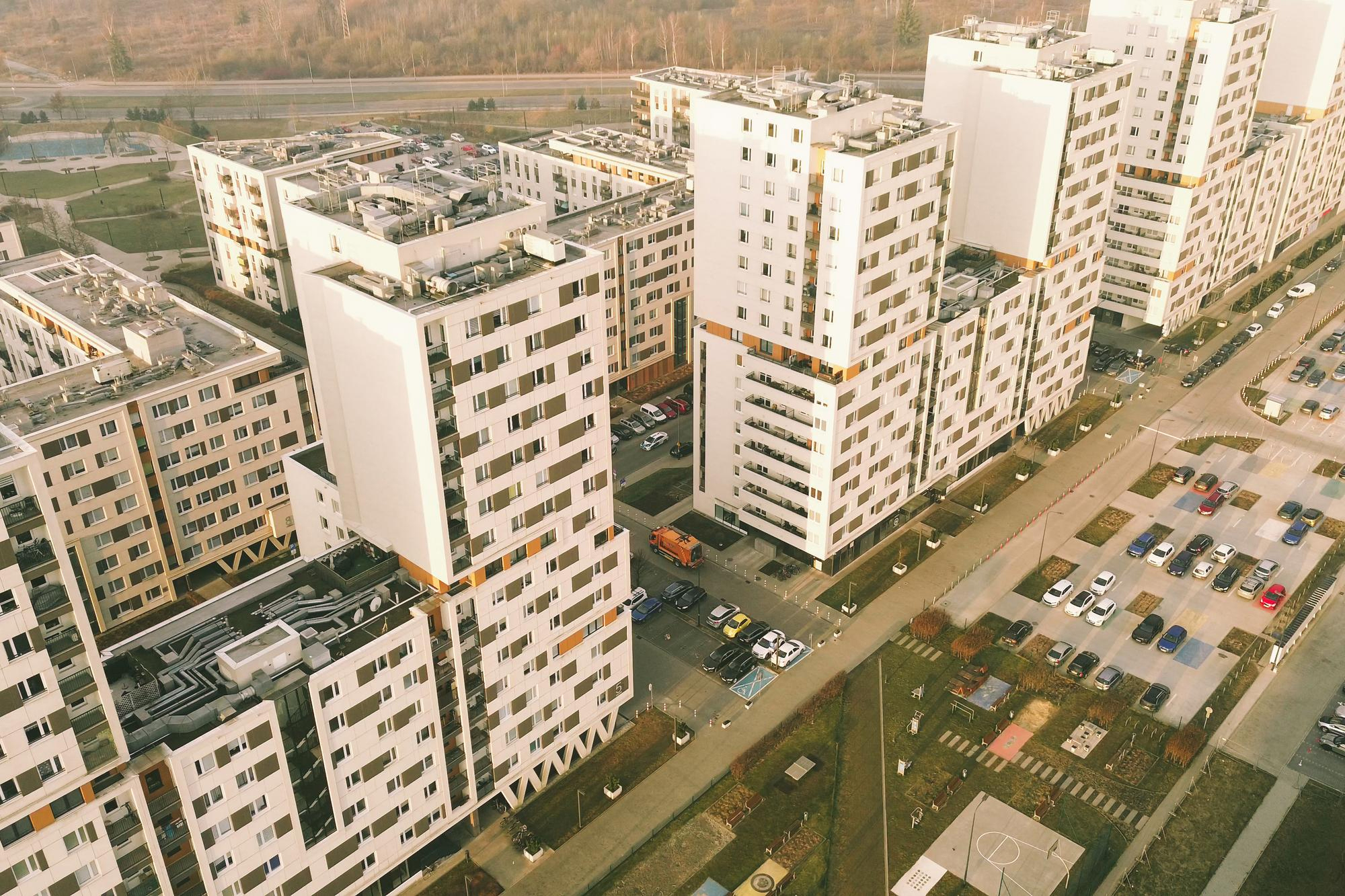
That demand dwarfs the project’s capacity. When completed in March 2027 (assuming the deadline is kept), the development will deliver 1034 residential units; only 208 units are finished and ready for occupation right now. Put another way, fewer than 1.5% of the initial wave of applicants can get a roof over their heads.
Somerlife is a R576 million greenfield development delivered through a government-private sector partnership and managed by IHS Property as a long-term, rental-only community. I can’t confirm, but I think the rental values range from R800 to R3000 per month for a studio, from R1,600 to R3100 per month for a one-bedroom, and from R1900 to R5500 per month for a two-bedroom. The scheme is targeted at working-class households with combined monthly incomes under R22000. The buildings are EDGE-certified (Excellence in Design for Greater Efficiencies), incorporating water- and energy-saving technologies intended to reduce utility costs for low-income tenants. I have not visited them yet, so this is all hearsay.
For decades, many low-income workers in South Africa have been pushed to marginal peripheral townships or informal settlements, incurring crippling daily commuting costs and limited access to services, so the location in Somerset West is a significant factor! People who live at Somerlife will have walkable access to dense employment opportunities, commercial centers, public transport, healthcare facilities, and schools… and this all sounds very good indeed.
Yet (or should I say “but”) the Somerlife application crisis reminds me of the systemic failings exposed in the 2026 budget review. Minister Simelane conceded that the pace of state-subsidized housing delivery remains deeply concerning: against a national target of 37779 affordable units for the previous financial cycle, the department delivered only 23027 units.
We must get roofs over our people’s heads.
A HEAT DOME
During June, an unprecedented Heatwave across Western and Central Europe resulted in at least 17 deaths.
For those of you who didn’t know, now you will, that an intense and very much historic heatwave, nicknamed the “heat dome,” has been cooking large areas of Western and Central Europe over the first part of June. This has happened because of a high-pressure system trapping hot air from North Africa, elevating temperatures by 10°C to 16°C above seasonal norms and breaking long-standing records for May.
ANOTHER WIN!
I am thrilled to announce a Wildlife Migration Milestone for Uganda, but really for us all! For the first time in 40 years, wild elephants crossed the border back into the Mount Elgon region of Uganda, signalling an incredible win for regional transboundary conservation.
Historically, more than 1000 elephants roamed freely across the entire mountain landscape, doing their thing and minding their own business. However, during the political instability in the area and severe poaching of the 1970s and 1980s, the elephant population on the Ugandan side was completely wiped out.
The return of the elephants is a direct result of decades of coordinated transboundary environmental management, including habitat restoration, satellite tracking and corridors, and the efforts of cross-border rangers: and I thank them very much for their efforts.

SOME CYBER SECURITY NEWS
And this is an important one for June, where Global intelligence highlights a newly identified threat cluster, UNC6692 – and they are not team players!
So what’s happening?
The UNC6692 threat cluster is a sophisticated, highly financially motivated cyber espionage group first observed by Mandiant/Google Threat Intelligence in late December 2025.
What makes this group uniquely dangerous is how they combine psychological manipulation: specifically targeting employees via internal-looking corporate channels—with a highly modular “living off the cloud” technical approach to bypass traditional corporate network defences.
The operation breaks down into a two-part attack strategy: an aggressive social engineering psychological trap, followed by a silent, multi-part malware deployment.
Phase 1: The Social Engineering Trap (“The One-Two Punch”)
Rather than just sending a single phishing email, UNC6692 creates a multi-channel crisis to drive the target into their hands:
- Email bombing: The attackers launch an automated spam campaign against a single employee, flooding their inbox with thousands of junk messages to create frustration, anxiety, and distraction.
- The Teams “rescue”: Minutes later, the employee receives a Microsoft Teams chat request from an external account disguised to look like the internal IT helpdesk. The “agent” claims to have noticed the email disruption and offers to implement a security fix.
- Credential harvesting: The attacker directs the user to a phishing page hosted on a legitimate AWS S3 bucket. Trusting the Teams interaction, the user logs in to the fake portal, exposing their corporate credentials.
- Payload delivery: While a fake progress bar displays a “security configuration” update, the user is prompted to download an archive labeled as a “Registration Service” update. The archive contains a malicious AutoHotKey script that installs the SNOW malware suite.
Phase 2: Inside the SNOW Malware Ecosystem
Once inside, UNC6692 avoids a single large, conspicuous file. Instead, they deploy three lightweight, specialized components that mimic legitimate system activity (these cyber scoundrels are very sneaky!):
- SNOWBELT (Foothold): A hidden Chromium browser extension that persists via scheduled tasks and Windows startup shortcuts. It intercepts browser activity to steal session cookies and bypass multi-factor authentication (MFA).
- SNOWBASIN (Local Brain): A Python-based local backdoor that runs a silent HTTP server (e.g., on localhost:8000). It executes PowerShell commands, captures screenshots, and collects files without calling suspicious external IPs.
- SNOWGLAZE (Cloaked Funnel): A Python tunneling tool that sends stolen data through encrypted traffic to reputable cloud services, masking communications with the attackers.
So why is this so hard for our cyber gurus and software to detect?
Well, traditional firewalls and antivirus programs focus on unauthorized outbound connections or known malicious domains. UNC6692 abuses trusted applications (e.g., Teams), browser extensions, and reputable cloud infrastructure (AWS), producing few traditional indicators.
You can always chat with me about cyber security at my business: www.cyberdefenders.co.za.
The END!
HUNGRY FOR MORE NUGGETS?
But wait, there is MORE!

Who is Jean-Pierre Murray-Kline?
Jean-Pierre is a South African serial e-entrepreneur, published author, and change champion who has worked in over 300 types of industries in some capacity or another. His own online businesses have generated millions of Rands and involved sectors such as law, web & app development, events & entertainment, property, technical services, media, and tourism.
He has traveled to over 180 cities worldwide and is extremely active as a business and environmental technologist. In addition to his own projects, he researches and consults on all things online: marketing, reputation, compliance, law, and e-security, and also offers strategy workshops and scenario sessions on future thinking with a key focus on technology, the environment, and global influences.
Jean-Pierre is often asked to be a guest speaker on a variety of subjects he continuously studies and writes about.
Disclaimer:
- While I attempt to ensure information is accurate and up-to-date at time of publication, I will not accept liability should information be used, and found to be incorrect. If you do see an error, please let me know.
- The links, images, videos and/ or text from this article are not necessarily under my direct management, ownership or care. Should you be the owner or manager of any content herein, and wish for the content to be removed, please let me know and it will be done.