
NUGGET (28 AUGUST 2026)

Nuggets! (Bite size updates on the real important stuff related to Tech, Trends, Business and the Planet.)
DON'T LIKE TO READ?
Let’s start with good news!
This month, I learnt that fresh data from the South African Department of Energy and the International Renewable Energy Agency (IRENA) Africa Report reveals that South Africa has installed more new solar and wind capacity over the past 18 months than it did during the entire previous decade combined.
Well done to the private power producers who are rapidly scaling up massive utility projects across the high-irradiance Northern Cape and coastal Western Cape. It hasn’t been said enough, so let me say it now: this clean-energy boom has played a major role in helping to eliminate national load-shedding.
DIGITAL NEWS
The global digital transformation company Trianz (https://www.trianz.com) officially entered the South African market on Friday, 14th of August 2026, marking the occasion with a Market Open ceremony at the Johannesburg Stock Exchange (JSE).

While some have referred to the occasion as a “global digital transformation” event, I just want to poke the bear and remind everyone that Trianz is a privately held company based in Santa Clara, California. It is primarily owned by its founder, Sri Manchala, alongside institutional private-equity firms. Its primary growth-capital backer is Capital Square Partners, a sector-focused private-equity firm based in Singapore.
MASSIVE GROWTH
Salesforce’s Global Tech Data showed in August that deployments of autonomous AI agents in business have nearly tripled in recent months. The average number of activated agents per enterprise rose from five in early 2025 to 13 by mid-2026.
Setup times have also accelerated significantly, with the average build-and-launch time falling by 53%, from four days to 1.9 days. Agents’ capabilities have expanded as well, growing from roughly two basic tasks in early AI assistants to an average of six distinct operational skills in modern autonomous agents.
WE HAVE DONE IT AGAIN!
Topped a list… but not a nice one.
South Africa has officially been designated Africa’s cybercrime capital by INTERPOL! How did we achieve this? Well, our country’s high level of digital connectivity makes us a prime regional target for global threat actors.
The INTERPOL African Cyberthreat Assessment Report 2026 shows that South Africa disproportionately bears the brunt of continental cyberattacks: it hosts 43.6% of Africa’s exploitable system vulnerabilities, accounts for 92% of all ransomware detections in Africa, and is the origin of 70% of business email compromise (BEC) attacks across the continent.
Phishing campaigns account for 40% of regional phishing activity, while digital sextortion, a major issue, accounts for 30% of extortion-related IP senders. Our country also suffered more than 213,500 targeted DDoS attacks. The report further found that AI is linked to more than half of all cybercrimes in Africa.
See https://www.interpol.int/en for more information.
HEAVY LIFTING IS GETTING EASIER
I want to report on a shift in heavy industry, as some operators are now moving away from speculative, cloud-dependent AI, which was once the focus of considerable hype, towards locally deployed edge AI and computer vision.
Industrial environments, especially those found at remote mining operations, are prioritising immediate, autonomous safety and operational solutions that do not depend on perfect cloud connectivity.
This trend was reiterated at the trade event Electra Mining Africa, which involves partnerships between industry leaders and academic institutions such as the University of Pretoria. These partnerships highlight how South African mines are starting to embrace practical technologies to address pressing, real-world challenges.
Instead of routing sensor data to distant data centres, machine-learning models run directly on local hardware, cameras, vehicle-mounted boxes, or onboard processors. This means decisions can be made in milliseconds, right there and then. This zero-latency processing is essential for preventing accidents.
DID YOU KNOW?
There is an environmental-crimes hotline and email address which you can use if you see any scoundrels hurting our environment.
0800 205 005 | envirocrime@dffe.gov.za

VUKANI!
A digital-marketing update…
I haven’t done one of these for a while, for some reason. In my research this past month, I learnt that fresh digital-economy metrics show South Africa now ranks third globally for mobile-web reliance, with mobile devices driving 82% of all national web traffic.
This means, my colleagues in marketing teams face a sharp wake-up call to convert multi-page desktop funnels into frictionless, single-scroll mobile layouts. This could help reduce significant cart-abandonment rates and improve conversions.
If you need help with digital marketing, don’t forget that I’m a guru at it. See more here: https://www.jeanpierremurraykline.co.za/all-things-online/
DRIP, DRIP
Johannesburg is losing around 655 million litres of water a day. That totals approximately 239.075 billion litres of treated water every year!
Another way to look at it is that the city is losing the equivalent of 1.3 Hartbeespoort Dams, or watching R10 billion in cash flush straight down the drain every four years…!
SARB
The South African Reserve Bank (SARB) has started dismantling the Payments Association of South Africa (PASA). The phasing-out process began on 11 August 2026, as part of a major restructuring designed to give the central bank direct control of the national payment system, which was previously managed by commercial banks.
Operational clearing functions are scheduled to transfer to PayInc by 2 September 2026.
What does this mean for us?
This shift moves behind-the-scenes banking rules into reality. It could directly affect how quickly money moves from one place to another, how much transactions cost,(I hate spending money on money), and which apps can be used to make payments.
What real-world changes might we see?
The first thing we might see is cheaper transaction fees. Let me unpack this a little.
Under the old system, traditional banks controlled the payment system through PASA, allowing them to keep transaction and clearing fees high to protect their profit margins. With this change, SARB aims to reduce the cost of moving money.
Therefore, dear reader, you may be able to look forward to lower fees for immediate transfers, debit orders, and digital payments as the central bank places limits on processing costs. Of course, banks stand to lose billions of rands in lucrative transactional revenue, so it will be interesting to see how they adapt.
The second thing we can perhaps look forward to is truly instant payments.
Under the old system, moving money between different banks could take anywhere from 24 to 48 hours unless you paid a premium ‘immediate settlement’ fee. With this change, real-time, instant clearing could become the new norm, the baseline method for making payments.
You may soon be able to pay for groceries, receive your salary, and send money using non-banking apps that are cheaper and easier to use.
For e-commerce shops, which are a particular interest of mine, we might look forward to reduced merchant-processing fees, faster order fulfilment, lower cart-abandonment rates, and easier access to new consumer markets.
Then there is what I think is the best potential outcome: improved financial inclusion.
Millions of unbanked South Africans rely entirely on cash because keeping a traditional bank account open is too expensive. This change could usher in inexpensive, secure digital-payment networks that make cash less necessary.
Central banks around the world are increasingly taking direct control of payment systems to break up commercial monopolies and lower costs for consumers. I believe this is all part of a larger shift towards a cashless global society, it’s inevitable!
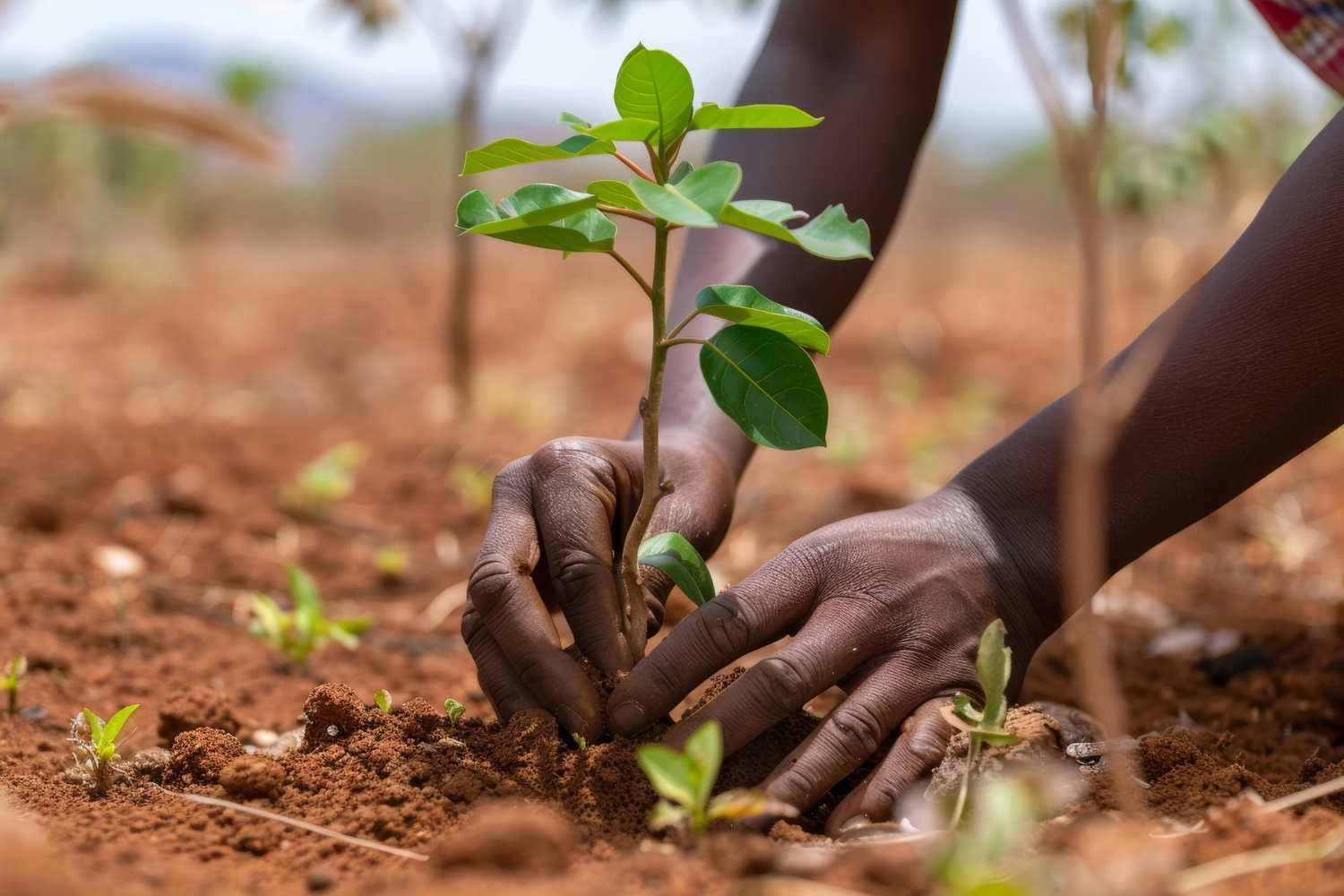
1,118,472 TREES PER MINUTE!
In a nationwide mobilisation on 3 August, Ethiopia splintered its previous record by planting 805.3 million tree seedlings in just 12 hours!
This achievement undoubtedly boosts the legitimacy and impact of the country’s Green Legacy Initiative, an environmental and afforestation campaign launched by Prime Minister Abiy Ahmed in 2019.
The total now exceeds 48 billion trees planted since the programme began, which, I believe, deserves applause!
EVEN ISPs CAN SUFFER A CYBERATTACK.
In August, ransomware crippled one of our ISPs. In this incident, RSAWeb fell victim, perhaps because of its own oversight, as the access point used by the e-criminals was a known vulnerability that had remained unpatched for nearly two years.
Once inside, the criminals went about their business, and their ransomware encrypted RSAWeb’s core operational systems. The attack forced RSAWeb to shut down its entire network, immediately taking its fibre, mobile, VoIP, PBX, and cloud-hosting infrastructure offline.
Because the core architecture had been compromised, the company had to rebuild and restore its systems in heavily isolated phases. Critical business functions, shared cloud services, and database hosting remained crippled for more than a week while engineering teams slowly cleaned up the environment.
The END!
HUNGRY FOR MORE NUGGETS?
But wait, there is MORE!

Who is Jean-Pierre Murray-Kline?
Jean-Pierre is a South African serial e-entrepreneur, published author, and change champion who has worked in over 300 types of industries in some capacity or another. His own online businesses have generated millions of Rands and involved sectors such as law, web & app development, events & entertainment, property, technical services, media, and tourism.
He has traveled to over 180 cities worldwide and is extremely active as a business and environmental technologist. In addition to his own projects, he researches and consults on all things online: marketing, reputation, compliance, law, and e-security, and also offers strategy workshops and scenario sessions on future thinking with a key focus on technology, the environment, and global influences.
Jean-Pierre is often asked to be a guest speaker on a variety of subjects he continuously studies and writes about.
Disclaimer:
- While I attempt to ensure information is accurate and up-to-date at time of publication, I will not accept liability should information be used, and found to be incorrect. If you do see an error, please let me know.
- The links, images, videos and/ or text from this article are not necessarily under my direct management, ownership or care. Should you be the owner or manager of any content herein, and wish for the content to be removed, please let me know and it will be done.