
NUGGET (28 FEBRUARY 2025)

Nuggets! (Bite size updates on the real important stuff related to Tech, Trends, Business and the Planet.)
DON'T LIKE TO READ?
Googles annual electricity consumption is in the range of 15 to 20 terawatt-hours (TWh) per year. That is enough to power about 1.9 million homes.
But how about WATER?
Did you even know that using Google search or AI uses water?
Did you know ChatGPT uses even more than Google?

This video hints at a new way of looking at the impact of something we all do every day.
There is an unfortunate truth in South Africa that SAPS, in general, do not make people feel safe. Actually, for many, they fear them. This video is one of many examples of why. This is a massive negative influence for South Africans and has to change.
https://www.facebook.com/reel/2940432326132753
To report a police officer in South Africa, you should contact the Independent Police Investigative Directorate (IPID) by calling 012 399 0000. If you do, I hope they do their job. So many of the organizations that are meant to protect us fail us – sadly, another red flag and negative trend in South Africa
Another influence for us all is stress. I don’t know about you, but I have some very stressed friends. Some very clever scientists have discovered that increased serotonin levels in the cerebellum actually reduce anxiety, challenging previous beliefs that linked serotonin to heightened anxiety. These scientists have manipulated serotonin-releasing neurons in mice and found that they could control anxiety levels, which suggests that cerebellar serotonin acts as a “brake” on anxiety. This is a breakthrough of sorts, and we must keep an eye on the work being done by Pei Chin and George Augustine because, soon, there may be a pill that can truly treat chronic stress. However, with that said, I do believe anxiety plays a role in how our bodies function and has even influenced our evolution over time. The more complicated a species is, the more stressed out it will be. Read more here: https://scitechdaily.com/scientists-found-a-brain-switch-that-could-turn-anxiety-on-and-off/
~
A green Flag and some great news.
African startups have appeared to have had a strong start to 2025, raising $289 million in January, a 240% increase compared to the same month in 2024.
This marks the second-best January for funding since at least 2019. The top four deals in January were:
- PowerGen, a renewable energy company, raised over $50 million to build a scalable platform for energy solutions across Africa, highlighting rising interest in sustainable energy.
- LemFi, a fintech startup, secured $53 million to expand into Asia and Europe, showcasing the global demand for African fintech innovations in remittances and cross-border payments. Love it when money flows!
- South Africa’s Naked raised $38 million in a Series B round to enhance its insurtech products, as the sector continues disrupting traditional insurance models.
- Enko Education raised $24 million to expand its network of schools across Africa, addressing the continent’s educational challenges. This is how I like to see tech and money being applied – nothing is more important to me than education!
Now a red flag.
Nigeria’s Dangote Oil Refinery, the largest in Africa and currently holding an inexplicable 4-star rating on Google, is set to achieve full capacity within the next 30 days. According to its head, Edwin Devakumar, it is currently operating at 85% capacity.
The refinery, which has a processing capacity of 650,000 barrels per day, has encountered difficulties in securing local crude oil, resulting in imports despite an existing agreement with the Nigerian government. To address supply issues, regulators are enforcing local crude quotas by denying export permits to non-compliant producers.
In line with its expansion strategy, the refinery is also exploring new markets, having recently sent jet fuel shipments to Saudi Aramco.
As you know, I have concerns about fossil fuels. The Dangote Oil Refinery, like any large petroleum facility, will contribute to environmental pollution in various ways. Here are some estimates regarding its environmental impact:
- Greenhouse Gas (GHG) Emissions: The refining process generates substantial CO₂ emissions. Estimates for a refinery of this magnitude suggest it could emit between 10 to 20 million metric tons of CO₂ annually, depending on its efficiency and technology.
- Air Pollution: This refinery will release pollutants including sulfur dioxide (SO₂), nitrogen oxides (NOx), carbon monoxide (CO), volatile organic compounds (VOCs), and particulate matter (PM2.5 and PM10), all of which can lead to respiratory illnesses, acid rain, and smog.
- Water Pollution: Operations will produce wastewater containing heavy metals, hydrocarbons, and toxic chemicals that, if improperly managed, could contaminate local water sources.
- Soil Contamination: Accidental spills and inadequate waste disposal can result in soil degradation, negatively impacting agriculture and local ecosystems.
In 2025, there are more sustainable ways to power our lives and work.
I must track social trends and influences. Its part of the work I do.
One of the ways I assess a community’s moral compass, perceived self-worth, and general ethics and self-respect is the way they treat animals. Animals are one thing, but how about children?
How does one ever begin to understand a community that is subjected to such tragedies as we see in this article?
How can we ever allow and be able to accept the murder of four-year-old Davin Africa from Cape Town, who was shot while sleeping just days before his fifth birthday? I can’t even begin to imagine how his parents and family are feeling, and what makes it so much worse is that it happened only two years after his 12-year-old sister, Kelly-Amber Koopman, was killed in similar circumstances. This persistent ‘issue’ of children falling victim to gang violence in Cape Town has to stop. It’s the worst ‘trend’ and influence I have had to comment on in some time.
~
The theme for this month’s nuggets is clear and not even nature can be left in peace.
Imagine crime in a nature reserve being so bad that the United States Embassy in South Africa is warning its citizens to stay clear!
Fort Klapperkop Nature Reserve in Pretoria has had to implement restrictive measures to help improve visitor safety.
The reserve was established in 1898 and is known for its scenic views and wildlife—something we city folk really need to remember is out there.
It’s so sad for me to hear that this once-popular destination for joggers and sightseers is also being impacted by crime. Despite security upgrades, patrols, and restricted access, crime continues to persist.
You can read more here: https://businesstech.co.za/news/property/810923/historic-south-african-nature-reserve-ruined-by-reign-of-terror/
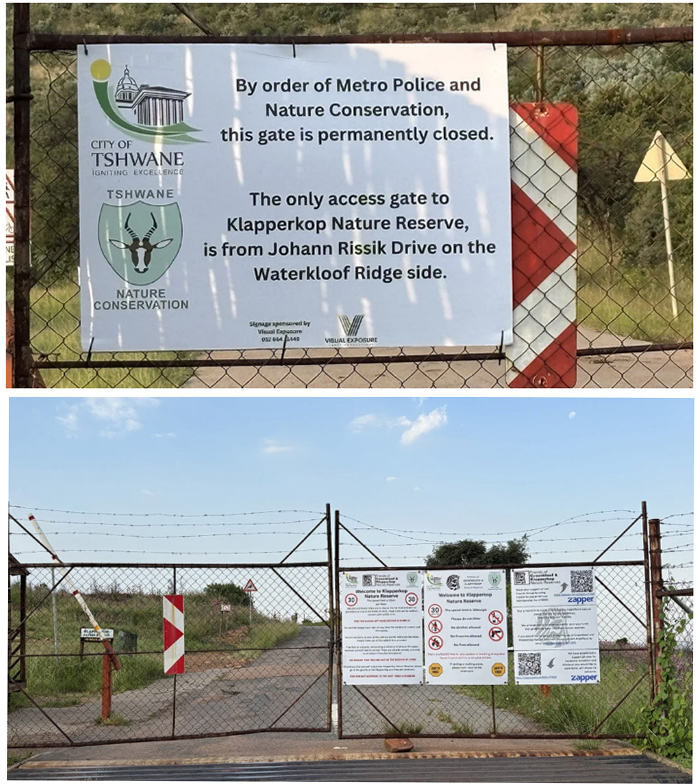
Credits: BusinessTech.co.za
In 2025, it’s totally unacceptable that I am still having to learn about and read articles for my research discussing this ongoing prehistoric human practice, which should have died out ages ago with the Neanderthals. The Humane Society International in the UK has reported a significant increase in trophy hunting imports of iconic wildlife, including lions and elephants. Data shows that 39 species have suffered. The Hunting Trophies (Import Prohibition) Bill in the UK is meant to address this issue, but it has been delayed for the most bogus of reasons, and because of this the killing of lions and African elephants has risen dramatically compared to the previous year. The trophy hunting industry is a business. Never forget that. It is hunting for pleasure and profit.
Donald Trump has been a massive influence in February 2025 and no doubt will continue to be for some time. One ramification I learned about is that the future of 11,000 staff members of Environmental Protection Agencies in the USA is being put at risk. Learn more in this video: https://www.youtube.com/watch?v=4-4ix-idCVE
I know many people who are against plastic surgery. Interestingly, the term ‘plastic surgery’ might not even be the most fitting description, but that’s a topic for another discussion.
What I want to emphasize is that pollution isn’t just present in the ocean, at that school field we pass by, or on the beaches; it’s also inside us! A recent study suggests that the levels of microplastics in human brains may be on the rise, reflecting the increase in global microplastic pollution over the past 50 years (well before my time). An analysis of tissue samples from postmortem cases between 1997 and 2024 indicates a growing trend of microplastic contamination, particularly in brain tissue, as well as in liver and kidney samples. Microplastics have been detected in various bodily fluids (including sperm) and tissues, with potential links to health issues like strokes and heart attacks, although their full effects on human health remain largely unclear… but it’s reasonable to assume they aren’t beneficial!
What I find particularly fascinating is that the concentration of microplastics was found to be six times higher in brain samples from individuals with dementia, although the study advises against concluding a direct cause-and-effect relationship. So, there you have it; plastic surgery isn’t what you should be worried about. If you’re interested, you can read more here:
Over the past five years, at least ten South African government departments have faced significant cyberattacks. One particularly notable incident was a ransomware attack on the South African Weather Service (SAWS), which disrupted its IT systems and forced the organization to rely on social media for communication. This attack was attributed to RansomHub, a group linked to Russia that is known for exploiting vulnerable systems.
A study by the European Repository of Cyber Incidents confirmed that South Africa is the second most targeted country in Africa for cyberattacks against political entities, with 21 documented incidents since 2000. (To be counted as an ‘incident,’ any event must meet the CIA triad of information security and be publicly reported.) I can’t help but wonder if South Africa will witness an increase in attacks originating from the USA during the Trump administration. I believe we will.
Our Minister, Khumbudzo Ntshaveni, has acknowledged the rising tide of cybercrime, particularly ransomware, impacting both the government and the private sector. In Africa, only Egypt experiences more cyberattacks than South Africa. I will be visiting Egypt in March and hope to gather more information about why they face a higher number of attacks
A study I came across in Nature Energy indicates that Battery Electric Vehicles (BEVs) now match traditional petrol and diesel vehicles in lifespan and mileage, averaging 18.4 years and 124,000 miles (or 199,556 kilometers). It hadn’t occur to me that electric cars had been around long enough to achieve that!
The study, which analyzed nearly 300 million UK MOT test records from 2005 to 2022, revealed that newer BEVs have improved reliability, with a 12% lower failure rate annually compared to 6.7% for petrol and 1.9% for diesel vehicles. The research involved multiple institutions, highlighting Tesla as a leading BEV brand, with Audi and Skoda excelling in the petrol and diesel categories.

Dr. Viet Nguyen-Tien, a co-author of the study, stated that BEVs are now a viable and sustainable alternative to traditional vehicles. Robert Elliott, also involved in the study, noted that despite higher initial emissions, BEVs can offset their carbon footprint over time.
In South Africa, a 2nd hand car as opposed to a brand new one, regardless of if its petrol or Electric is still the better evil.
~
Here’s some innovative news regarding fuel, specifically jet fuel, which certainly requires some forward-thinking!
A team of brilliant scientists has created a lignin-based jet fuel that can store hydrogen in a stable liquid form, offering a safer and more efficient alternative to traditional pressurized hydrogen storage. (To me, anything that can explode or burn, combined with pressurization, seems like a risky idea.)
This research, led by Professor Bin Yang of Washington State University and published in the International Journal of Hydrogen Energy, presents a method for chemically binding hydrogen within the fuel. This approach simplifies its storage and use as a zero-emission energy source.
This innovative development could significantly enhance the adoption and implementation of sustainable aviation and clean energy technologies. Their lignin-based fuel, which is produced from agricultural waste, not only improves engine efficiency but also reduces emissions compared to conventional fuels. Future efforts will focus on utilizing AI-driven catalysts to further enhance the chemical reactions involved.
~
I think it’s time I end this month’s nuggets article and do so by sharing some cybersecurity updates or news. We all know we are moving into the Age of Quantum Computing: the ‘New Frontier.’ This month, my research stumbled upon a few things that I would like to share with you.
One is a recent global study by Naoris Protocol that highlighted the alarming rise in data breach costs, projected to reach an average of $5.3 million in five years, up from $4.88 million. Convert this to Rands, and it’s a very scary number! Nearly all surveyed Web3 developers—95%—predict these costs will increase, with 18% estimating they could exceed $5.5 million by the end of the decade. How they got a web developer to do a survey, I don’t know, because their strong point is very rarely administration!
Then, there’s news on the metaverse (which is not as much of a craze as it once was), but now, with AI technologies advancing, they introduce significant threats into this digital world, with over 41% of developers strongly agreeing that these innovations will lead to more cyberattacks. Mr. David Carvalho, the CEO of Naoris Protocol, warned, “The fusion of the metaverse and AI creates a larger attack surface for hackers, while quantum computing threatens traditional encryption methods.” I maintain that here in South Africa, we need to be more worried about the basics—like not using public Wi-Fi and using two-factor authentication.
In response to these challenges, Web3 developers are apparently turning to Decentralized Physical Infrastructure Networks (DePIN), which are meant to decentralize critical systems to enhance security and reduce reliance on centralized structures.
All news and data illustrate the need for businesses to adopt better cybersecurity solutions. As the integration of AI, the metaverse, and quantum technologies transforms the e-landscape, our businesses should act now to improve their chances against sophisticated cyber threats and those cyber scoundrels. If you ever need services related to e-security, remember this is one of my businesses serving all of Africa: www.cyberdefenders.co.za
The End!
HUNGRY FOR MORE NUGGETS?
But wait, there is MORE!

Who is Jean-Pierre Murray-Kline?
Jean-Pierre is a South African serial e-entrepreneur, published author, and change champion who has worked in over 300 types of industries in some capacity or another. His own online businesses have generated millions of Rands and involved sectors such as law, web & app development, events & entertainment, property, technical services, media, and tourism.
He has traveled to over 180 cities worldwide and is extremely active as a business and environmental technologist. In addition to his own projects, he researches and consults on all things online: marketing, reputation, compliance, law, and e-security, and also offers strategy workshops and scenario sessions on future thinking with a key focus on technology, the environment, and global influences.
Jean-Pierre is often asked to be a guest speaker on a variety of subjects he continuously studies and writes about.
Disclaimer:
- While I attempt to ensure information is accurate and up-to-date at time of publication, I will not accept liability should information be used, and found to be incorrect. If you do see an error, please let me know.
- The links, images, videos and/ or text from this article are not necessarily under my direct management, ownership or care. Should you be the owner or manager of any content herein, and wish for the content to be removed, please let me know and it will be done.