
NUGGET (28 MARCH 2025)

Nuggets! (Bite size updates on the real important stuff related to Tech, Trends, Business and the Planet.)
DON'T LIKE TO READ?
WHICH BUSINESSMAN MIGHT BENEFIT FROM A WEAKENED NASA?
I can think of one, wait, two.
NASA has recently closed its Office of the Chief Scientist and two other offices, resulting in the layoffs of 23 employees.
This decision was made on the 10th of March and leaves NASA without a mechanism to provide independent scientific advice to its leadership during critical discussions about future missions, including those to the Moon and Mars.
Acting NASA Administrator Janet Petro has apparently described the layoffs as an opportunity to reshape the workforce, coinciding with a broader federal downsizing strategy initiated by President Trump. This sounds like something a Trump supporter might say?
Other closures include the Office of Technology, Policy and Strategy, and the diversity initiatives office, the latter a direct outcome of an executive order aimed at eliminating such programs across the federal government.
The rationale behind the closures of the scientific advisory offices remains unclear as the agency prepares for a leadership transition following the confirmation of billionaire Jared Isaacman as NASA’s new administrator.
Sounds like there are cards being played here, and let’s keep an eye on who fills positions and which businesses pick up future contracts. (For now, management of USA appears to be that of millionaires and billionaires.)
I AM PROBABLY PREACHING TO THE CONVERTED, but life can be stressful, right?
With that said, I have recently learned that some spots on our beautiful planet have much less stressed people than many others.
In the 2025 Global Emotions Report by CEOWORLD magazine, conducted between December 2024 and January 2025, the study surveyed individuals across 197 countries on their stress experiences.
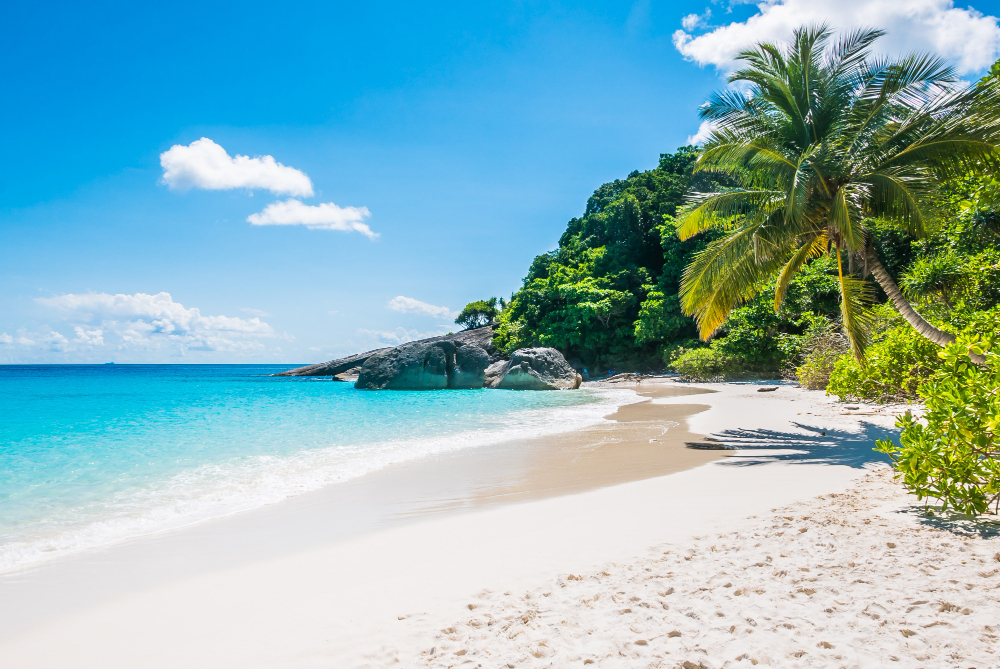
Monaco has emerged as the least stressed country on our little planet, while Seychelles was the least stressed in Africa, ranking 57th worldwide.
Seychelles benefits from its beautiful beaches, low population density, and stable economy, resulting in a stress score of 71.48. Mauritius followed in 77th place, with other African countries like Gabon and Botswana also ranking well. The trend and point I want to make here is those countries that embrace natural environmental beauty appear to do much better!
In contrast, Burundi is noted as the most stressed country on the continent, facing economic and political challenges. I don’t know how it can be more stressful than South Africa, but I am glad we have not topped the list of the most stressed people on the continent, although I am sure some of us might say this list was rigged! Either way, get out into nature – it’s good for you.
Health is wealth.
I wrote an article some time back called “The SMARTEST COUNTRY IN AFRICA.” It’s not about South Africa… the link to this article is below, but what I want to share is some news on Rwanda, which is ambitiously positioning itself as a leader in fintech within the African region with a comprehensive five-year strategy designed to enhance economic growth and financial inclusion. They continue to impress me! Their initiative was (in part, I am sure) inspired by the transformative potential of technology as seen during the COVID-19 pandemic, which accelerated the shift towards a cashless society across Africa.
As most of us know, by the year 2021, mobile payments surged significantly in countries like Kenya and Nigeria. Rwanda wants to attract investments, become a hub for fintech innovations, and transition towards a largely cashless economy.
Their government is supporting transformation through initiatives like the #TwagiyeKashiresi campaign and considers technological advances such as Central Bank Digital Currency (CBDC) and enhanced interoperability crucial for achieving these goals. They have also established something clever: a regulatory sandbox, which allows new services to thrive while addressing regulatory gaps, thus ensuring a balanced approach to facilitating innovation without stifling startups with heavy regulations.
Cutting out red tape needs to be part of the plan!
I really believe cashless is the way to go, and to suggest it’s an elitist or exclusive technology is a mistake.
That article link: https://www.jeanpierremurraykline.co.za/the-smartest-country-in-africa-by-jean-pierre-murray-kline/
I LOVE SHARING INNOVATION NEWS from Africa, so let me do that today.
Maybe you have not heard of AJA.LA STUDIOS, LTD. (ajala.ai)?
Well, they are a provider of enterprise voice AI solutions on this continent, and they have recently announced their expansion of voice recognition services to include Nigerian Pidgin English! How awesome is that! Or should I rather write, “How sweet be dat?”
This enhancement shows ajala.ai’s dedication to delivering comprehensive AI language and service options tailored to the needs (and flavours) of the African market.
For those of you who don’t know, Nigerian Pidgin English is widely spoken across Nigeria and Africa, and ajala.ai’s voice recognition service demonstrates impressive accuracy with a 6% word error rate (or WER for short). This means they are outperforming leading English voice recognition solutions for conversational Pidgin.
In addition to Nigerian Pidgin English, ajala.ai offers voice recognition services for several other languages, including Yoruba, Igbo, Hausa, Kiswahili, Kinyarwanda, Nigerian English, and Ghanaian English. See their website here: www.ajala.ai.
It’s been a while since I last wrote about Zimbabwe.
Recently, at the Mobile World Congress 2025 in Barcelona, Ericsson and Econet Wireless Zimbabwe signed an important agreement (for Zim) to integrate 5G Core functions into Econet’s network, enhancing their core network capacity with Ericsson’s Cloud Core Exposure Server (CCES).
What does this mean for normal people who don’t know what on earth a CCES is?
In short, this partnership is meant to help transform the telecommunications ecosystem in Zimbabwe to allow for scalable, reliable, and secure network capabilities while preparing for next-generation services. So, it’s a step in the right direction.
Every country in Africa must win for us to win.
#NOTNECESSARILYROCKETSCIENCE
The other day, SOMEONE LAUGHED AT ME when I said I was going to cancel my X subscription to financially hurt Elon Musk. One other thing I say frequently, and that also gets a laugh, is that I tell people I am going to go to space. And it’s true!
“Not Necessarily Rocket Science” is a fluppen excellent memoir and career guide by aerospace professional Kellie Gerardi, exploring her journey in the space industry. The book emphasizes that there’s a place (and space) for anyone passionate about exploration in space, regardless of their background. Gerardi also shares experiences from her training for Mars and testing spacesuits in microgravity, providing insights and inspiration, along with all sorts of other interesting personal stories… such an authentic book.
This book reignited my determination, was entertaining to read, inspiring, and also filled with really interesting facts! She apparently might have even done a shoot for Playboy! (Not that I read such things.)
The book also deals with racism and ethics, two subjects I address all the time, and I believe we might actually resolve these issues ‘in space’ before we see them sorted out here on earth.

SEARCH ENGINES ARE A LAW UNTO THEIR OWN.
That’s a fact. But also… they do offer a free service to most of us!
The Competition Commission of South Africa recently recommended that Google compensate local news media between R300 million ($16.3 million) and R500 million ($27.2 million) annually for three to five years due to alleged anti-competitive practices. How was this determined?
Also, are local media houses paying their writers and content producers proportionally? Are there any holy cows at all in media? What would happen if Google stopped featuring News24? Would their business totally collapse? Should search engines not earn from news houses for the traffic they drive to them?
The Competition Commission recommendations stem from their 16-month Media and Digital Platforms Market Inquiry (MDPMI), which ‘found’ that digital platforms like Google and social media sites are disproportionately benefiting from news content produced by local media. I really do want to know how this was worked out.
The CompCom’s report also warned that companies not complying with these remedies might face digital tariffs of 5% to 10%.
Meta, the parent company of Facebook, was also flagged for prioritizing its algorithm over South African news media.
I fully support local is lekker, but is there any way we can get that revenue directly to the content creators and not via the media houses, which are massive companies in themselves?
Donald Trump has been a massive influence in February 2025 and no doubt will continue to be for some time. One ramification I learned about is that the future of 11,000 staff members of Environmental Protection Agencies in the USA is being put at risk. Learn more in this video: https://www.youtube.com/watch?v=4-4ix-idCVE
YOUR MONEY CAN MAKE A DIFFERENCE.
For our future, our health, our environment. Where you spend it and where you invest it.
In 2025, I don’t believe we should be investing in any entity that pursues new fossil fuels and, whenever possible, boycotting the businesses that make a profit from such investments. This has already started and will be a trend that increases. Between October and December 2024, two major South African asset managers, Coronation and Stanlib, significantly decreased their holdings in Sasol, leading to a R9 billion reduction in Sasol stock. This selling pressure contributed to Sasol’s share price drop from R100 to R80. Coronation’s Top 20 fund completely exited its Sasol position, selling 6.2 million shares. In contrast, only seven unit trusts significantly acquired Sasol shares, including Allan Gray and Old Mutual funds.
Old Mutual and Allan Gray, what’s with this rhetoric you share about being good companies but then facilitating investments (of any sort at all) in such things in this day and age?
JOHANNESBURG IS HAVING ITS MEXICO MOMENT.
While Centurion is one of the areas most affected, I can tell you firsthand that there isn’t a road in my suburb that does not have a hole in it. We have a sinkhole crisis, and there are increasing calls for the situation to be declared a national state of disaster. Yes, another state of disaster. How many are we on now?
The City of Tshwane’s Region 4, which includes Centurion and Laudium, has been particularly hard-hit, with approximately 58 out of 61 identified sinkholes located in Centurion. The MMC for Cooperative and Shared Services, Kholofelo Morodi, explained that the area’s dolomitic landscape is prone to ground collapse, especially following heavy rainfall and water leaks. Of course, if it had been maintained, things might not be as bad, right?
To address the crisis, the municipality apparently plans to formally request the National Government to declare the sinkhole situation a National Disaster, which would provide access to additional funding necessary for repairs. If they get this right, I hope that we have an independent audit of suppliers and do not allow the municipality to absorb the funds and distribute them as they wish.
PRINTING A HUMAN ORGAN.
How many years are we away from this? 1, 5, 20?
I reckon between 7 and 12 years – this is my guess, and you can come back to me and pat me on the back if I was right, or smack me over the head if wrong.
The fact is, advances in 3D bioprinting are well on their way!
In my research this month, I have learned about some very clever biomedical engineers at the University of Melbourne who have created a 3D bioprinting system that can produce structures mimicking various human tissues, from soft brain tissue to rigid cartilage and bone!
The University of Melbourne team appears to have revolutionized the conventional slow, layer-by-layer bioprinting approach by implementing an optical-based system that prints cellular structures in just seconds—approximately 350 times faster than traditional methods. Their system utilizes acoustic waves from vibrating bubbles to position cells within the printed structures, allowing for more effective tissue development. How awesome is that and how clever are these people! Shoh!
(PS, I wonder how much one of those printer cartridges might cost?)
The End!
HUNGRY FOR MORE NUGGETS?
But wait, there is MORE!

Who is Jean-Pierre Murray-Kline?
Jean-Pierre is a South African serial e-entrepreneur, published author, and change champion who has worked in over 300 types of industries in some capacity or another. His own online businesses have generated millions of Rands and involved sectors such as law, web & app development, events & entertainment, property, technical services, media, and tourism.
He has traveled to over 180 cities worldwide and is extremely active as a business and environmental technologist. In addition to his own projects, he researches and consults on all things online: marketing, reputation, compliance, law, and e-security, and also offers strategy workshops and scenario sessions on future thinking with a key focus on technology, the environment, and global influences.
Jean-Pierre is often asked to be a guest speaker on a variety of subjects he continuously studies and writes about.
Disclaimer:
- While I attempt to ensure information is accurate and up-to-date at time of publication, I will not accept liability should information be used, and found to be incorrect. If you do see an error, please let me know.
- The links, images, videos and/ or text from this article are not necessarily under my direct management, ownership or care. Should you be the owner or manager of any content herein, and wish for the content to be removed, please let me know and it will be done.