
NUGGET (29 MAY 2026)

Nuggets! (Bite size updates on the real important stuff related to Tech, Trends, Business and the Planet.)
DON'T LIKE TO READ?
NEED SOME SPACE?
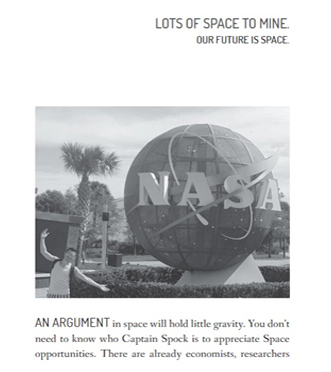
Does Africa have a future? How about a future in space? The role of space tourism, especially in business, will (believe it or not) have a profound and massive impact on us in Africa.
This chapter from my new book (see image) offers an exceptional (if I can say so myself) overview of where we are with space missions and opportunities for us.
You can listen to an audio sample of the full book or read the PDF sample at the link below. Full audiobook is available for just R99, and the paperback, including delivery to your local Postnet, is R350! What a deal!
Your future awaits at this link: https://www.jeanpierremurraykline.co.za/shop/
ONE FOR THE HUMANS.
Some wonderful tech innovation news, powered by human intelligence. YAY! AI Diagnostics (a startup based here in Cape Town) has launched a digital stethoscope called Ostium. Interesting name yes?
What does it do you ask? Excellent question! Let me tell you. Well, it’s designed to combat tuberculosis (TB is a huge health challenge for South Africa) utilizing an AI model named AI.TB. The device listens to lung sounds to identify acoustic signals linked to TB in real time. This technology addresses a significant gap in traditional screening methods, as over 50% of TB cases in South Africa present no symptoms at all, leading to undiagnosed individuals unknowingly spreading the disease and all sorts of other ripple effects. In short, our clever people in South Africa have invented a way of “hearing” what patients cannot articulate; the Ostium provides a critical tool for early detection. Well done, this is exactly the type of tech innovation I love. Want to know a little more? Happy to oblige dear reader.
The Ostium is a portable and ‘apparently’ a very user-friendly device (I have not tested it yet) that connects to smartphones or computers, making it ideal for use by nurses and community health workers in resource-limited settings (which is the majority of places in South Africa).
What does it do better than traditional gadgets and tests? Unlike cumbersome X-ray machines, it offers point-of-care convenience with rapid results, as the AI analyses breathing sounds and delivers screening outcomes within three minutes! That’s like a cup of noodles that can save your life! In April 2026, AI Diagnostics secured R85 million ($5.2 million) in pre-Series A funding to expand its operations throughout Africa and Asia, aiming to enhance TB detection and control efforts in affected communities. I’m very proud! You can see more here: https://www.aidiagnostics.health/
E-SAFETY NEWS.
A recent report titled State of Workforce Password Security 2026 by Zoho shares that 36% of surveyed organizations in SA reported a breach in the past year, surpassing the global average of 32%. This is not the sort of competition we want to be winning at, and let’s remember, not everyone reports a breach so there are probably a lot more. Some other key nuggets:
- Identity Visibility Gap: 79% can’t fully track user identities or access permissions.
- Lack of Zero Trust: 71% of businesses don’t have a Zero Trust security strategy.
- Third-Party Risks: 58% cite unmanaged third-party access as a significant risk.
- SME Vulnerability: 50% of SMEs lack a dedicated security team.
These findings were shared ahead of World Password Day, which was on May 7. If you like, you can read the full report here: https://www.zoho.com/sites/zweb/images/vault/state-of-workforce-password-security-2026.pdf

THOSE WONDERFUL BROWN AND GREEN THINGS.
The Presidential One Billion Trees Programme was officially launched by Deputy Minister Bernice Swarts not long ago at the Pretoria National Botanical Garden. This initiative is a massive expansion and rebranding of the previous Ten Million Trees Flagship Project, which aimed to plant 10 million trees over five years. In September last year, I think they were on just under 1.5 million so a little behind but who can be upset at all about 1.5 million more trees? I love this project’s theme and overall concept: tackling climate change, urban greening (which is needed so badly), and highlighting the many economic and social benefits of more trees and there are so many! Keen to know how to participate? Good on you! The Department of Forestry, Fisheries and the Environment (DFFE) has established a Tree Bank managed by the South African National Biodiversity Institute (SANBI) to store donated trees. You or your business can:
- Pledge trees through an online IT pledge form: https://10milliontrees.dffe.gov.za/10milliontrees/about
- Donate trees to be housed at one of the 11 national botanical gardens.
- Plant at home, in your community, or — if your boss allows — at the office!
I’ll plant one myself soon!
E-SECURITY NEWS.
I thought I might share that new research has revealed that 68% of passwords can now be cracked within just one day using advanced AI-driven tools. ChatGPT has been busy? This alarming news about vulnerabilities has of course sparked a global demand for enhanced security measures, including biometric and hardware-based multi-factor authentication (MFA). To be honest, I don’t think South Africa is yet onboard with tackling this issue, so please don’t forget everyone I have a business called www.cyberdefenders.co.za.
Some more news from another report (I go through a lot in my research). In this one, I learnt there is a Critical Skills Shortage: the national survey revealed a significant talent gap across the continent, and here in South Africa, we are sitting with 63% of cybersecurity roles in South African organizations currently unfilled or only partially filled as of late April 2026. Not good at all – why are we not offering these jobs? So, let my post be a crucial call to action for the industry!
WHAT WAS THAT?
Today (well the day I wrote part of the article), something jumped out at me. Not a spider or a rat, but an international news report. There is a suspected hantavirus outbreak from a cruise ship, and the patient (a British man) is now in South Africa. Hantavirus can be deadly, particularly in its severe form known as hantavirus pulmonary syndrome (HPS). The severity of the disease can vary, but HPS has a high mortality rate, with some estimates suggesting it may be around 38%. For context, COVID-19 had an approximate mortality rate of about 3%.
Or course, this suspicion has since been confirmed.
What else can I share? Well, the ship was traveling from Argentina to Cape Verde in the Atlantic Ocean. The patient tested positive for hantavirus and was sent to in critical condition to an intensive care unit in a Johannesburg hospital (may the force be with him). Tragically, three individuals have already died as a result of the outbreak, including a Dutch couple aged 70 and 69. I am so sorry to their friends and family.
BANKS ARE SAFE?
Ummm, perhaps not. There has been a surge in banking sector e-compromises! Recent data released in late April highlights that the financial services sector continues to be the primary target, accounting for 1858 of the 3219 data breach notifications received by the Information Regulator over the past year. Stay vigilant!
DID YOU HEAR?
About the Esquire Data Breach? Esquire Technologies (https://www.esquire.co.za/) in South Africa experienced a significant security incident now known as the Esquire Data Breach. Perhaps you have been a client of theirs? This particular incident involved a breach of unauthorized access to the company’s online ordering platform. It’s reported that Esquire acted swiftly by notifying the Information Regulator (in compliance with the legal obligations set forth in Section 22 of the Protection of Personal Information Act). Initial investigations pointed to a specific vulnerability; the unauthorized access targeted a segment of the company’s Syndicated API data feed SQL database, which provides crucial information for its online ordering system.
A RECOMMENDATION.
I finished this book during my little study break over the last few weeks and its really good stuff! ‘Nature’s Best Hope’ by Douglas W. Tallamy is a brilliant guide to restoring biodiversity by turning your own yard (if you are lucky enough to have one) into a wildlife habitat – which sounds like a lot of work and might involve lions. But if you invest the time to read this book, you will find it’s not, and the payoff is substantial. People are always asking me, “but what can I do” – and I always say “lots.” Conservation is something that starts at home. It’s important to learn quickly that in 2026, it’s no longer about humans versus nature; it’s about humans with nature. Humans need to be motivated to act, but for the particular problems we face, we cannot wait for the crisis to be in full swing. Discovering our own ignorance is never nice, but once we know that we can make a difference, the will to act seems to happen more ‘naturally’ for us.
This book’s main message is that because a lot (if not most, depending on the country) of land is privately or commercially owned, individual homeowners (and business owners) can save local ecosystems by making a few good decisions. While some parts of this book raised my eyebrows a few times, I think it might have been because of the writing style and his reference to our water crisis hitting a nerve.
All in all, this book is packed with good ideas as well as some real insights on what’s going wrong in our own backyard. Thank you, Douglas W. Tallamy, for the great book! I do hope many more people get to read it.
A NICE NUGGET INDEED.
Have you heard of lights-out automation? It refers to a fully automated factory or facility that operates without any human presence on-site. The term comes from the notion that machines do not require light to perform their tasks, allowing you to literally ‘turn off the lights,’ lock the doors, and let the factory operate autonomously.
The most famous example of a ‘lights-out’ factory must be the FANUC robotics factory in Oshino, Japan. You can find it at the bottom of Mount Fuji. This facility is recognized as a benchmark in the industry for dark manufacturing because it uses robots to manufacture other robots without human oversight for up to 30 days consecutively. How many of these factories exist today? As of the start of this year, there were only 223 ‘lights-out factory’ sites. It’ll be interesting to see how the totals are at the end of 2026.
ENVIRONMENTAL NEWS.
A bit sad unfortunately. In their April 2026 update, the IUCN has reclassified Emperor Penguins and Antarctic Fur Seals as endangered. Here is the information:
Emperor Penguins:
• Status changed from Near Threatened to Endangered.
• Threat: Early sea-ice breakup disrupts breeding and leads to high chick mortality.
• Population down by 22% since 2018; projections indicate a potential halving by the 2080s.
Antarctic Fur Seals:
• Status downgraded from Least Concern to Endangered.
• Threat: Food scarcity due to warming oceans pushing krill deeper.
• Population plummeted significantly from 2.19 million in 1999 to 944000 by 2026. This breaks my heart.
I will look for some good news next, but it too is endangered.

THE BIGGEST NEWS.
On the 26th of April, our Minister of Communications and Digital Technologies, Solly Malatsi, officially withdrew South Africa’s Draft National Artificial Intelligence Policy.
Why? Well, this decision followed the embarrassing revelation that the draft contained numerous fictitious academic citations, identified as AI hallucinations. These fake references indicated that the policy’s authors relied on the very technology it intended to regulate, without adequate human verification.
Do we have to restart the process? Perhaps. Is there a new timeline? Nope. Accountability? Nope
KEEP AN EYE ON THIS?
Our Department of Forestry, Fisheries, and the Environment (DFFE) has proposed a ‘flexible’ Environmental Impact Assessment (EIA) system to replace the current one-size-fits-all approach with risk-based screening. The goal advertised is to accelerate development, but environmental groups are expressing concerns regarding weakened oversight, as noted in analyses by Daily Maverick and Natural Justice – and I think there is reason to be concerned. Let’s keep an eye on this.
BIG PAY DAY.
There has been a record R2 trillion revenue collection reported by SARS over the last period, with their net collection for the 2024/25 fiscal year. That is an 8.4% increase, apparently driven by improved compliance and mining sector contributions. I hope that moola gets to where it’s needed and not a new jet plane or another SOE bailout.
SOME MUSKENEER NEWS.
For those of you who didn’t know, Elon Musk and Sam Altman are currently (at least at the time I wrote this) at the center of a high-stakes jury trial, alongside OpenAI and Microsoft, which began on Monday, April 27th. So what’s happening? Well, the trial addresses whether OpenAI has deviated from its original mission of serving humanity to become profit-driven. How fascinating is that as a subject for court! Also, this sounds more like a human thing to do than an AI.
Musk argued that OpenAI’s initial nonprofit status attracted top talent and funding under the promise of public service, a status he claims was later exploited for private profit. Musk’s legal team believe that Altman and Greg Brockman transformed OpenAI’s core technology into a commercial entity, primarily benefiting Microsoft, which is also a defendant in the case.
OpenAI’s attorneys, led by William Savitt, describe Musk’s lawsuit as a harassment campaign motivated by jealousy after failing to secure complete control over the company in 2017. So, there’s lots of mud-slinging. Mr. Musk is seeking damages between $130 billion and $150 billion, which he apparently intends to donate to OpenAI’s charitable branch rather than keep for himself. This is an interesting twist and strategy..
The trial’s verdict, which is anticipated to be ready by mid-May 2026, could have major repercussions, including leadership changes with the removal of Sam Altman and Greg Brockman from their positions. A victory for Mr. Musk might also force OpenAI to revert its transition to a for-profit organization, potentially jeopardizing its planned IPO later in 2026. The trial could also legally determine whether OpenAI’s models constitute Artificial General Intelligence (AGI), which under original agreements cannot be licensed to Microsoft for commercial use. (Remember, AGI, by the correct definition, does not actually exist… yet.)
I DIDN’T POST ON FREEDOM DAY.
I didn’t do any posts on Freedom Day; I was enjoying some freedom from social media, but I do want to talk about something happening now. There is a trend of xenophobia and a migration drive underway right now. We all know, as the 2026 election cycle intensifies, we can expect there will be shenanigans, but this level of anti-immigrant sentiment has emerged much higher than I thought and is actually a rather prominent theme in party campaigns.
Parties such as ActionSA and the Patriotic Alliance are making promises to ‘clean up’ cities by removing undocumented foreigners, repeatedly linking illegal migration to service delivery failures and rising crime. President Cyril Ramaphosa (who I see next week at one of my own work events) was speaking on Freedom Day and condemned recent xenophobic attacks and cautioned that legitimate concerns about illegal migration must not harden into prejudice or street justice. Meanwhile, civil society groups, including the African Diaspora Forum, have criticized much of the political rhetoric as cheap politics designed to win votes at the risk of stoking real-world violence. Low-hanging fruit?
Interestingly, and perhaps coincidentally, deportations appear to have surged, and the Department of Home Affairs reports a cumulative 46% rise in removals over the past two financial years, totalling 109344 people by the 31st of March 2026. Deportations climbed from roughly 39000 in 2023/24 to over 57000 in 2025/26, a jump attributed to ‘Operation New Broom’ — a nationwide campaign using drone surveillance, body cameras, and other high-tech tools to monitor borders and urban hotspots
The END!
HUNGRY FOR MORE NUGGETS?
But wait, there is MORE!

Who is Jean-Pierre Murray-Kline?
Jean-Pierre is a South African serial e-entrepreneur, published author, and change champion who has worked in over 300 types of industries in some capacity or another. His own online businesses have generated millions of Rands and involved sectors such as law, web & app development, events & entertainment, property, technical services, media, and tourism.
He has traveled to over 180 cities worldwide and is extremely active as a business and environmental technologist. In addition to his own projects, he researches and consults on all things online: marketing, reputation, compliance, law, and e-security, and also offers strategy workshops and scenario sessions on future thinking with a key focus on technology, the environment, and global influences.
Jean-Pierre is often asked to be a guest speaker on a variety of subjects he continuously studies and writes about.
Disclaimer:
- While I attempt to ensure information is accurate and up-to-date at time of publication, I will not accept liability should information be used, and found to be incorrect. If you do see an error, please let me know.
- The links, images, videos and/ or text from this article are not necessarily under my direct management, ownership or care. Should you be the owner or manager of any content herein, and wish for the content to be removed, please let me know and it will be done.