
THE APPLE FALLS FAR FROM THE TREE. (November 2025)
THE APPLE FALLS FAR FROM THE TREE.
What do you call an apple that plays the trumpet?
A tooty fruity.
First published in 2025
DON'T LIKE TO READ?
There is this 160 km-long valley (give or take a few meters) in South Africa, called the Apple Express, or the Pear Fact valley – pear factory. It’s a special spot in Mzansi where things are a-pear-ably going well, apparently? Langkloof is an agricultural gem found in the Eastern Cape. I was invited to do a little work on the future of pears and apples in the area and want to share a little about what I learned with you. Let me start off by saying many people have been hit in the head with apples. Isaac Newton and William Tell are two I can mention, and after that, they became famous. If you are looking for fame, Langkloof might be a spot to go visit and sit under a tree for a while? For now, the most famous person from the area has to be the very old Kouga mummy, estimated to be around 1930 years old. The Kouga mummy is a real mummy, like one you might have found in Egypt. The significance of this particular mummy is that it is the first and only mummified human remains ever found in South Africa. I thought it was a Khoe-San female, but as I learned, it was a mummy-daddy.
The Langkloof area has 7 towns and villages, the three most prominent towns are Joubertina, Haarlem, and Avontuur. Near to and around these are about 25–30 apple and pear farms, and these businesses can wear the title of Champions of South Africa’s pome (a fruit with a fleshy enlarged receptacle and a tough central core containing the seeds) industry, and they contribute up to 20% of the country’s total production of apples and pears!
Our country’s apple industry, in general, is experiencing fantastic growth with exports to Asia and within Africa, and depending on which data you refer to, we are looking forward to about a 7% increase for this year. A substantial portion of that is because of new markets like the Far East and Asia, but Thailand also appears to be very interested in what we have to offer. Same same, but different. Our pear industry is also reporting steady growth, with an emerging market being China. In short, all is ripe – please excuse the pun.
But there are always two sides to a coin, with the exception of Bitcoin. Family-run businesses have pros and cons, and the businesses in Langkloof will know this too well. Working with family does have one particular tricky challenge I want to mention, and that is the challenge of succession – the difficulty of trying to get younger future generations to carry on in an industry they know little about, and perhaps are not particularly interested in?
Have you heard of Aura Farming? Worth a Google. It is the only type of farming I think the youth are really interested in at the moment. So, the challenge remains.
Now, on the subject of aging farmers, this is a global problem and not unique to South Africa. For example, our pale brothers and sisters in Europe are having an awful time with only 11% of their farms run by people under the age of 40. Only 11%. On the other side of the globe, the average farmer in Japan is 68.
Then there is Mr. Marcelino Abad Tolentino, possibly the oldest man ever to have lived… he is a 125-year-old farmer in Peru. Do you know what really bugs an older person?
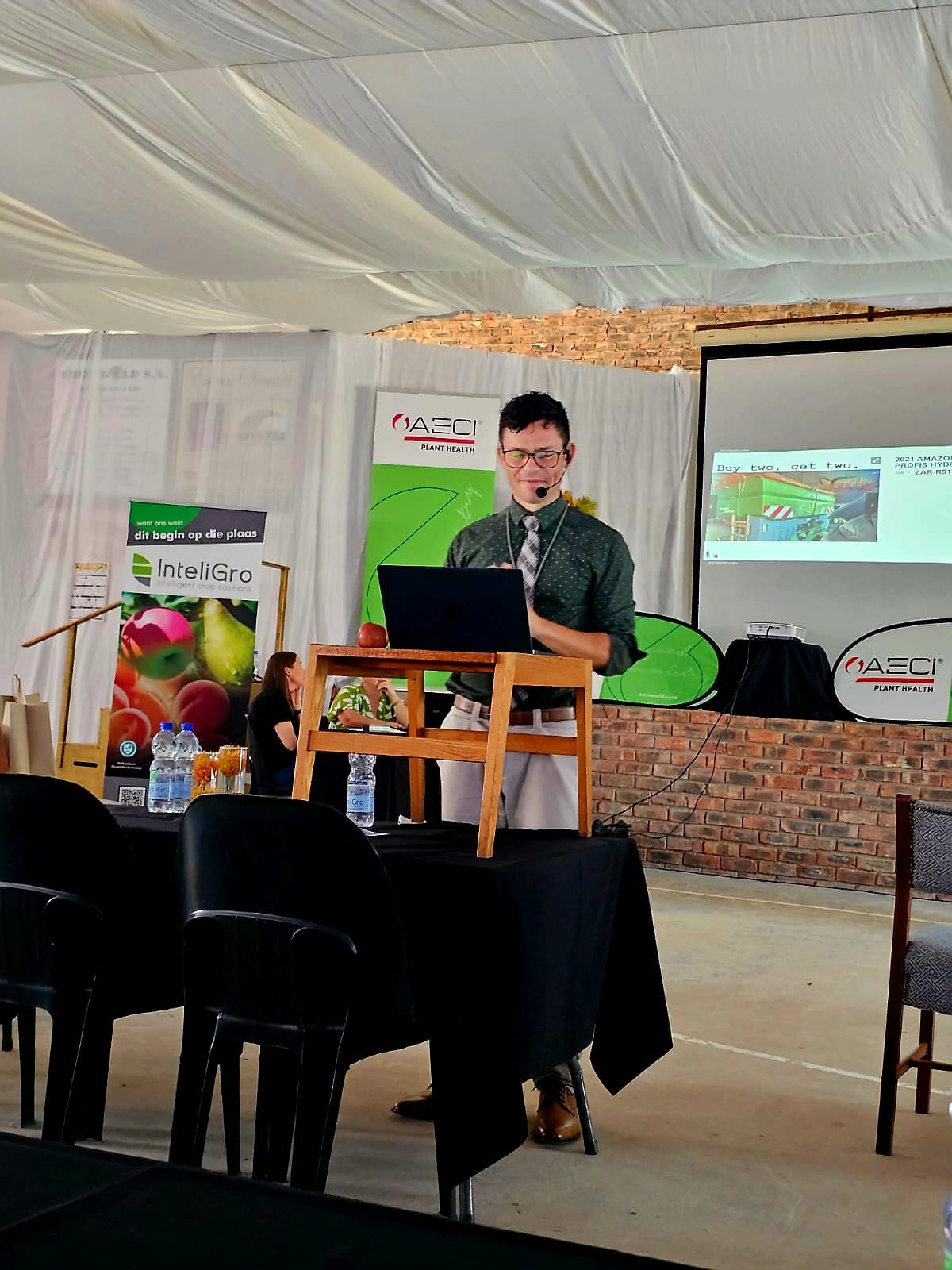
Cold weather? The main influence for the people in this apple and pear valley, and the entire planet for that matter, has to be climate change. Climate change can make things toasty or chilly and farming is very sensitive to weather fluctuations with even the slightest hint of a drought, heatwave, flood, or hailstorm reducing crop yields. Within the next 30 years or so, I am not certain there will be sufficient cold weather in Langkloof for trees to blossom properly, and their trees do need a specific period of cold, called winter chilling, to blossom nicely for us. The challenge is then, how to deal with reduced ‘chill units’. Climate change will also affect water availability and increase pests and diseases because those critters thrive in warmer weather.
The mountains that surround these businesses do not protect them from climate change any more than they do from international shenanigans, like the trump card, geo-politics, currency exchanges and issues with exports. So many challenges to deal with and the biggest concerns I have are increases in the costs of two things: labour and water. The industry is already dealing with rising costs of fertilizer, energy, chemicals, and even municipal rates, but the costs of water and labour specifically I expect to increase substantially. The businesses in Langkloof remain manual labour-intensive, but as change progresses, and it will, it’s an inevitable certainty, owners and managers will be faced with aggressive resistance to automation (by labour unions, civil rights groups and government) and at the same time be burdened with extreme pressure to follow global trends and embrace automation or risk pricing themselves out of the market. In the future, providing jobs as well as affordable food will be a contradiction in many ways.
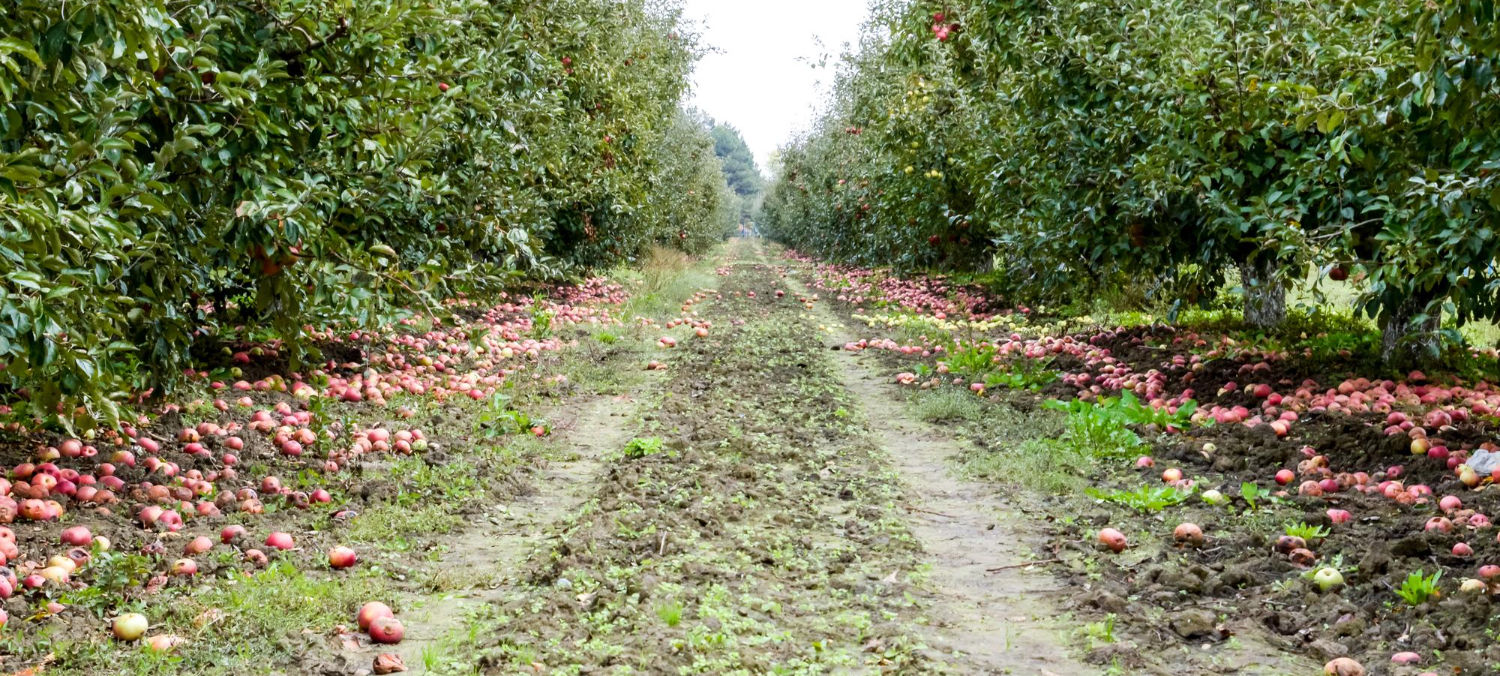
The wild card for the sector, I believe, is the Climate Change Act of 2024, which comes into effect on the 1st of January 2026. Commercial farms emitting over 30 000 tonnes of CO₂-equivalent annually will face direct impacts, and I believe most farms are grossly underprepared and managers ignorant. The regulation imposes:
- Allocated carbon budgets over a five-year period.
- Mandatory submission of verified mitigation plans to reduce emissions.
- Financial penalties for exceeding carbon budgets, affecting profitability. The silver lining is that there is potential income from carbon credits for increased carbon sequestration—or achieving carbon-negative results. If you need help with a ‘carbon footprint assessment’ and plan, I am a good person to speak with. In the coming years we will see a flood of service providers entering the market to offer such services, and an interesting one to google right away is Farmonaut’s Carbon Footprinting.
There is unfortunately not enough time to go into detail about tariffs, changing eating trends, soil quality, or failed land redistribution programs, but know that all these are significant forces of change. To end this article, I want to highlight some of the technical innovations underway, and these are in no particular order.
Automated harvesting robots. Great for business, but not necessarily for the labour force. Intelligent harvesting robots used in combination with AI machine vision and robotic arms to identify ripe fruit and pick it with little to no damage. Precision irrigation. Drip irrigation systems using sensors and software to monitor soil conditions and deliver precise amounts of water and nutrients. Smart spraying. This helps minimize chemical usage and reduce environmental harm.
AI-powered forecasting. AI is everywhere… for farms, machine learning and AI models are being used to predict optimal harvest periods, forecast water requirements, and model crop growth based on weather, soil conditions, and fruit load. You will also find AI-driven sorting, with packhouses using multi-frequency light sensors and special cameras to quickly and gently inspect apples and pears. Gene editing. Breeding methods are now complemented by advanced technologies like gene editing to produce higher-quality varieties of apples and pears. Ethically questionable, or are we just rushing evolution along? Subject for another article. Improved cold storage. Controlled atmosphere storage with low-oxygen sealed environments acts as a “cryo-hibernation” (like in Star Trek) to slow down the aging process of fruit. Carbon budget friendly? I think not.
The above list is by no means exhaustive, but let me also do some name dropping of actual gadgets. There is: Tevel Aerobotics. They are using flying robotic arms to harvest fruit, some capable of picking up to 500 apples per hour. KUKA CropBot have a highly manoeuvrable robotic arm that uses computer vision to harvest individual apples with suction. FFRobotics have an automated platform with multiple robotic arms that can twist or clip fruit from branches. LJ Tech. They have a line of orchard autonomous sprayers, such as the S500Pro, S500, and S1000 models, which use navigation systems. MetoMotion’s GRoW has a fancy 3D vision technology and robotic arms to harvest crops. Designed for tomatoes, but could be used for apples and pears? TOMRA Food. They have a custom Spectrim with LUCAi™ platform which uses deep learning AI and multi-frequency light sensors to grade fruit based on external and, get this, internal quality as well. Impressive!
Want more? Here you go! BIOMETiC (Q Eye Smart) also have an AI-based optical sorter that uses their very own BIOMETiC Ai to inspect and grade fruit. RINAC has a custom-built Controlled Atmosphere (CA) and Modified Atmosphere (MA) chamber to extend the shelf life of fruit. There are a few interesting designs in the market with this particular type of technology. Felix Instruments with their F-901 AccuRipe & AccuStore, using gas analysers to monitor and control atmospheric conditions in storage and ripening rooms. But wait, there is more! There is Biotechnology. Gene editing like Arctic® Apples, which are genetically modified apples developed by Okanagan Specialty Fruits that resist browning when cut or bruised. Then there is CRISPR gene-editing technology being used to develop better fruits (and humans, for that matter) that are resilient to disease.
Okay, that’s enough… but trust me when I say there are a lot more gadgets and innovations available, and many more in development. Unfortunately, very few invented in or made in South Africa or Africa. What farmers need to know is that everything will:
- Reduce the workforce,
- Require capital investment, (a lot)
- Require teenagers (or at least very tech-savvy adults).
If current trends and future disruptions were not enough to tackle, the businesses in Langkloof have one other major task.
The towns of Joubertina, Avontuur, and Haarlem will change drastically in the few decades and could either go the route of abandoned mining towns or turn into little pockets of excellence. Future (smart) towns can appeal to the youth (which the farms need so desperately), offering them unique opportunities for work and play, and also an authentic natural space away from the hustle and bustle of the larger cities.
The towns and the farms have a symbiotic relationship, and for them to succeed, they will need to coordinate and champion a master plan for their mutual future. Who will get this conversation going? Tackling sociopolitical factors, lobby groups, and changes to authorities and regulators, both entities and laws, such as Hortgro, the Department of Agriculture, Land Reform and Rural Development, the South African Fruit & Vegetable Canners’ Association, and AgriSA, will need a consolidated proactive approach.
I also imagine many future changes to the Marketing of Agricultural Products Act, the Perishable Products Export Control Act, the Agricultural Product Standards Act, the National Environmental Management Act, the Biosecurity and Agricultural Management Bill, the Water Act and the Labour Relations Act. Things are a changing
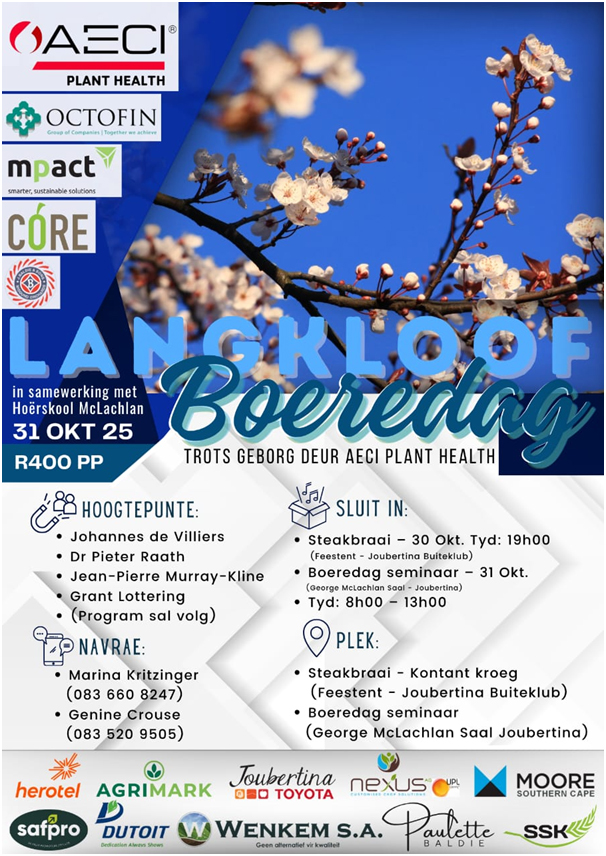
In our future, we must prepare for modular, swarm-ready machines, regenerative solutions, increasing data-driven systems, and the pursuit toward fully autonomous, net-zero farming. South Africa is in a race to compete globally, and we would be making a mistake to think our momentum is enough. We have to pass the baton on, and that’s as much our responsibility as it is for the next generation to take it. Failing which, the apple will fall far from the tree.
Thank you to the Langkloof Bloeiselfees 2025 for allowing me to work on this project and share some insights.
The END.
WANT TO READ MORE ARTICLES?
But wait, there is MORE!

Who is Jean-Pierre Murray-Kline?
Jean-Pierre is a South African serial e-entrepreneur, published author, and change champion who has worked in over 300 types of industries in some capacity or another. His own online businesses have generated millions of Rands and involved sectors such as law, web & app development, events & entertainment, property, technical services, media, and tourism.
He has traveled to over 180 cities worldwide and is extremely active as a business and environmental technologist. In addition to his own projects, he researches and consults on all things online: marketing, reputation, compliance, law, and e-security, and also offers strategy workshops and scenario sessions on future thinking with a key focus on technology, the environment, and global influences.
Jean-Pierre is often asked to be a guest speaker on a variety of subjects he continuously studies and writes about.
Disclaimer:
- While I attempt to ensure information is accurate and up-to-date at time of publication, I will not accept liability should information be used, and found to be incorrect. If you do see an error, please let me know.
- The links, images, videos and/ or text from this article are not necessarily under my direct management, ownership or care. Should you be the owner or manager of any content herein, and wish for the content to be removed, please let me know and it will be done.