
The future is not guaranteed, but there will be a company that will insure it for you! (March 2025)
The Future of Insurance: How Technology and Innovation Will Transform the Industry
DON'T LIKE TO READ?
First published in 2025
Will there be insurance companies in the future? How about insurance brokers? I am sure these are some of the questions my audience had in their minds as I walked up onto the stage at the UnconFerence in February 2025 for my new client, iTOO Special Risks Insurance.
When preparing my research, I had to ask myself, what was the first thing you ever insured? Cell phone? Car? The first real thing I ever insured, truthfully, was a person: my mother-in-law. She worked for me and I had an invested interest. At the same time, I insured my own mother. I thought that between the two of them, the house couldn’t lose. But that’s just me.
Google the company called ‘Bellesa’. They arranged for custom insurance on their vibrators. I know this is not the first thing people might insure, but it’s interesting. It’s interesting because in the future there will be a trend among manufacturers, especially those with products that are on lease, to self-insure products. Of course, for most, the first thing they insure is cell phones.
But what is going to happen when cell phones are no longer? Will that time ever happen? Yes, for sure. Right now, in development in some lab, probably in the USA, where a lot of Chinese people (using my writer’s creativity license here) are working, is the next best thing under development. It’s true that in about 15 years, people will not be dragging around these blocks of technology like we do today.

Instead, access to communication and services will be available via wearables, and a few years later, people will have implants. This fact will both take away from the insurance industry and also offer an opportunity.
I want you to watch this video. It’s about a young man ordering a pizza with an implant. He is using nothing more than brain power, vibrating the bones in his head, which the device then tracks and communicates to the internet. This is a real video and device, and the pizza actually arrived. The future of implants is upon us.
On the subject of food, I recently had dinner with a friend, and while waiting for the bill, he looked at his watch seven times. Not because he was bored—well, I hope not—but because it kept flashing with notifications. That same day, I was working at Mugg & Bean in Durban at the airport, and next to me was a young Zulu couple on a date. The man took two phone calls during the first hour, and she used the time to scroll on her phone. I don’t know about you, but I would have left that date right then and there. I was shocked to see she still left with him, but I know life is very different in 2025, and in 20 or 30 years’ time, technology will be far more intrusive, if you can believe that.
It’s hard to think about the future when the present is so chaotic. Don’t ever fool yourself: life in South Africa today is madness, and that’s before we even start to think about Industry 4.0.
Technology shapes human habits, as will the subscription and circular economy. These are all going to influence the insurance sector, which has, for all intents and purposes, remained the same for thousands of years. Insurance dates back to its oldest form when communities used to stockpile resources for times of disaster. That was the first-ever insurance: sharing of risk.
What future can I see for the insurance sector in this day and age? There are two ways for people to plan for their future careers and their businesses. Let me unpack this a little.
One is called forecasting. This is when management looks at a period of data, assuming that its trajectory will not alter too much, and then they can make a reasonable prediction about what will happen in the future.
For example, if Helen Zille has enjoyed eating Kellogg’s All-Bran flakes for 10 years and has purchased two boxes every month for that same period, Pick n Pay (which, in 2025, is working hard to plan for the future) can forecast that they can expect an income from Zille of R175 per month for the foreseeable future, with an annual increase on the product.
The problem with forecasting is that it makes little to no provision for any significant alteration of data. This is where scenario planning comes in, because it looks at potential and likely changes, and then sets out alternative or multiple forecasts—normally four or so based on levels of probability.

Recently, Zille and Gayton McKenzie have been seen running together on the Sea Point promenade, sharing their weight loss journey on X. (Again, I am using my writer’s creativity license.)
From this new data, a scenario planner at Pick n Pay could consider how this might affect their future income. Will Zille change her diet and product to gain more energy and keep up with Gayton, or will she simply eat more of the same product, or perhaps do nothing at all?
Three potential scenarios—each of which Pick n Pay can then analyze to determine whether they need to prepare for less, the same, or more income.
Scenario planning is serious business, and it was created by Herman Kahn. He developed the practice while working at the Rand Corporation in the 1950s, primarily focusing on potential nuclear war scenarios for the US military. Unfortunately, war in 2025 is again a real influence. Scenario planning was later popularized by Royal Dutch Shell in the 1970s.
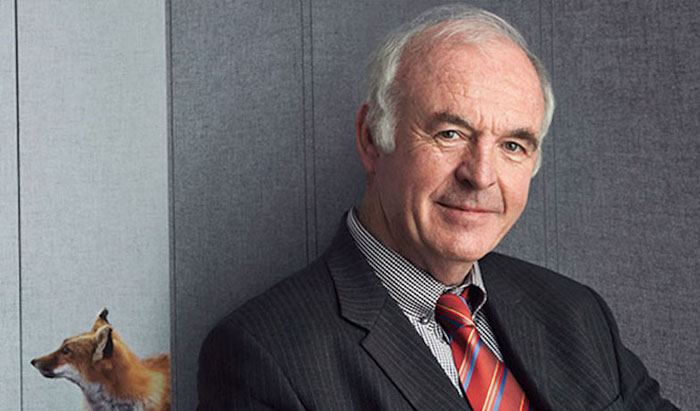
In South Africa, the most famous scenario planner is Mr. Clem Sunter, renowned for his work at Anglo American and, of course, his series of books called the Foxy Trilogy. I have worked with Mr. Sunter for over a decade through one of my businesses.
People struggle to identify the influence of change or become overwhelmed by the number of influences. When it comes to technology, most people don’t believe that South Africans, or Africans, have the know-how to lead. Many believe that we perhaps prefer to be led, while others think we prefer our populace to remain ignorant so that they can be easily persuaded. However, technology has leveled the playing field.
If you share the view that we are not leaders or innovators, you would be wrong. Africans have a long history of innovation, inventions, and cleverness in general.
* We sorted out mathematics.
* Iron smelting.
* We performed the first heart transplant and the first penis transplant—not both from the same person, fortunately.
* 3D-printed prosthetic limbs.
* The Creepy Crawly.
* M-Pesa Mobile Money—digital currency (we had internet banking before Canada!).
* Computers for the blind.
* Oil from coal.
* The Rooivalk attack helicopter.
* PayPal—from a person whose name we dare not say right now.
* Thumbzup payment system.
* Q20 lubricant.
* Coffee, an African innovation—probably first invented to keep our politicians awake in Parliament.
* Water purification nanotechnology.
* The malaria vaccine.
This list is almost endless; unfortunately, so is the list of issues we have to deal with. While these innovations can cost money to develop and implement, they can also generate revenue. Even better, there are investors interested in funding innovation!
There is an insurance company in South Africa that does not like to wear clothes, but they recently raised $38 million in a Series B round to automate and expand their product offerings.
LemFi, a fintech startup also in Africa, has secured $53 million to expand into Asia and Europe.
Enko Education, also from Africa, has raised $24 million to expand its network of schools across the continent, addressing the continent’s educational challenges. Really good stuff.
Technology and innovation can be used as catalysts for positive change. However, technology for the sake of it is not always the solution. When we implement tech or innovate just for the sake of it, we sometimes get bamboozled. There must be social buy-in, or we end up with disasters like e-tolls.
When we innovate, we must keep in mind the true recipients of the benefits. If the objective is to use technology simply because it’s a trend, we are making a mistake. However, if we want to use tech to alleviate poverty and inequality we are on the right path!
South Africa is a young democracy, and the disasters we are experiencing today, including the water crisis, I would have suggested as probable scenarios if I had been around at the height of apartheid. I was 9 years old when we had our first democratic vote.)
Change is never linear. It’s almost like a swinging pendulum, swaying to and fro with incremental improvements each time until the desired new equilibrium is met. A maturing democracy with good governance is what is needed to tackle our very serious social ills and our human behavior. There is a lot of work to be done here. We don’t even respect ourselves enough to avoid littering.
So what of the future?
Technology will bolster our robust financial sector and create a more efficient and accessible justice system. Once people learn to use social media like humans and not attack dogs with no fear of ramifications, and once countries learn to regulate digital platforms without favoritism, our media and society will gain a powerful tool greater than any single broadcaster or publishing house has ever had.
Law, media, and our finance sector have been drivers of societal progress and our moral compass since the inception of our first version of this republic.
But how is progress going to be achieved? Well, I could name-drop some technologies that can be used, like blockchain for transparency, and AI to filter out political shenanigans, but these technologies are nothing without the will to change. The will to change is important, but remember the reasons why you need to change. Also, while some of you are still trying to work out how to use ChatGPT, you must not forget that every nerd and inventor’s objective right now with things like AI, search result algorithms, and humanoids is to try to make them as close to human likeness as possible. That is why I call AI our ‘man in the mirror moment,’ because the data being used to teach these technologies is resulting in them reflecting back some of the worst of humanity: racism, sexism, xenophobia and homophobia.
All future technologies will have levels of autonomous learning. This means that, in order to make tech better, we need to improve ourselves.
The digital footprint we create needs to set a better example. Our soft skills need to be worked on before we worry about hardware. The AI revolution has a lot to learn from Ubuntu in South Africa.
I would now like to shift this articles focus onto the influences of change for the insurance sector at large, using two separate perspectives or looking glasses so to speak:
* Commercial and business
* Private and home.

To follow I have created a generalized summary, and to start, I want to mention Property & Physical Assets Insurance.
Property Insurance: People will own fewer homes and offices in the future, and offices will become smaller and sometimes turn into fully shared environments. Will we need as much coverage?
Will South Africa need property insurance for land expropriation without compensation? Of course not. We might need insurance against misinformation and the silliness shared on the web.
Equipment & Machine Insurance: The subscription economy will mean people own less and share more, and this applies across the board. I am currently developing a tech solution for South African universities to ‘Airbnb’ their million-rand lab equipment when it is not in use. How will insurers respond to that?
Inventory Insurance: Covering stock and raw materials. As we move towards the ‘local is lekker’ movement, there will be less inventory. Africa will also start to process more raw materials instead of sending them overseas just to buy them back later.
Business Vehicle Insurance: I believe the demand here will still be high, but how does one insure an electric car, hydrogen car, or large drone versus a petrol car? In Africa, we have been delivering medical supplies with drones long before anyone else—Rwanda, Ghana. Is the future of Africa’s transport sector really that car dependent? How does this influence risk and demand for cars in business? Soon, Checkers 60 60 might even be delivering our staff to work.

Liability Insurance: With the mass migration of Africans across countries, and with the blurring of actual borders, how do you adapt to the challenges of jurisdiction with digital globalism?
Professional Liability Insurance: Covering negligence claims, especially for service providers like lawyers and medical professionals. Who is responsible, though, if the error comes from a robot, digital code, or some open-source self-learning AI? This technology is already here. Who do you prosecute?
Business Continuity & Income Protection: Gen Z, in general, is not interested in spending their entire life, or any significant part of it, at any one company? Businesses will also be diversified in their structures, with many components outsourced. I don’t even know if Key Person Insurance will be needed as much in the future.
Business Interruption Insurance: This is going to be a massive sector in Africa, driven by the pressures of climate change and urbanization.
Trade Credit Insurance: If blockchain and automated payment systems are being used to guarantee delivery before payment, will this still be needed in the future? Less so, I am certain.
Cybersecurity & Technology Risks: No one is immune. I believe this will see the fastest and most intensive demand in the next 15 years, without a doubt.
Following closely behind will be Technology Errors & Omissions policies, protecting IT companies from liability due to software failures, service interruptions, or misconfigurations. Insurance for humanoids will also grow in demand. In Mzansiwe already have robots working at hotels.
Employee & Workers’ Compensation Insurance: South Africa has about 200 labor unions. I believe these will amalgamate and many will disappear in the coming 10 years or so. The gig economy and entrepreneurs are going to reshape our market, and the driving force will be technology and the youth. Within factory and office walls, there will be more automation and robotics, and fewer people—percentage-wise, at least. Workers’ Compensation Insurance, Employment Practices Liability Insurance, and Group Health, Life, & Disability Insurance will all be impacted.
Industry-Specific Insurance: Commercial Real Estate Insurance must consider natural disasters. Construction Insurance (Builder’s Risk) is especially relevant with our Minister’s initiative to ‘turn SA into a construction site phase’ and the challenges posed by building mafias.
Retail Business Insurance: With e-commerce growing and malls shutting down, how will this change insurance?
Logistics & Transportation Insurance: This covers freight, shipping, and delivery-related risks. South Africa will fix its rail network, and in comparison to today, less will be moved by road.
Will classic car insurance still be needed in the future? The last fossil fuel cars that will ever be made will roll off the production line within the next 10-15 years. Major carbon taxes will be applied to the cars that remain and still use petrol. Will they lose their appeal? Will they appreciate in value? Do you think Gen Z will want to inherit one of these?

I have just touched the surface of the current market landscape, but what about the future, and please do not forget that the vast majority of our population has no retirement plan. My own Mothers plan is simply death before she has paid off her credit card. Also to remember, very few trust banks, especially after the VBS scandal, and then there is the added fact that people are living longer, and some don’t want to retire at all!
Climate & Disaster-Prone Property Insurance: Identify these potential clients and sell them custom insurance now.
Business Interruption Insurance: COVID is not the last natural or man-made disaster. Such events will increase in severity and frequency.
Cyber & Tech-Related Insurance: This is a massive sector. With AI, human mistakes and ignorance, supercomputers, and the shift of our personal and business lives online—combined with quantum computing and the pending singularity—I cannot stress enough the importance of starting scenario planning solutions for home and office. The need for help is enormous. It’s also the reason I started my latest business, cyberdefenders.co.za
The future is custom solutions for insurance.
Renters Insurance: More people will rent, the housing tribunal is not coping, and homeowners need protection.
Earthquake and Custom Land Insurance: In areas like the Western Cape, Eastern Cape, Drakensberg, and Northern Cape for earthquakes, and in Johannesburg, due to groundwater extraction, mining, and soil composition, Jozi is facing a significant risk akin to a ‘Mexico moment.’
Health & Life Insurance: I do not believe South Africa will implement the NHI, at least not in its current form. Unique custom products can be tailored, especially with how AI is helping the health sector prepare custom medications. Medical negligence is another area of concern, with the state backlogged on at least R68 billion in unpaid damages.
Some personal protection insurance, like pet insurance, is excellent and much needed. Personal Identity Theft Insurance will likely become a much higher need.
Just a reminder: if you receive calls on your cell phone with no one talking on the other end, do not respond to them—they are likely recording your voice for identity theft.
Creative Insurance: This covers music, videos, and art. With AI being able to create, emulate, replicate, and possibly steal, how are our creatives and those who have a vested interest protected?
South Korea is recognized as the first country to grant legal recognition for the ownership of intellectual property created by artificial intelligence. The South African Companies and Intellectual Property Commission made history by being the first patent office in the world to grant a patent listing to an AI system rather than to a person.
Finally, Gadget Insurance will cover digital implants, medical devices, robots in the home and office, security devices, drones, wearables, green solution technologies, and even insurance for space tech (yes, South Africa has a space agency, and we will soon start launching our own space gadgets). Then there are intangible assets, digital currencies, failures of smart contracts, and cross-border transactions. The list of future things to insure is already here.
Let me end this article with a few tips:
Technology for dynamic pricing and outreach to future clients is helpful.
Use technology to offer your platforms in multiple African languages. Perhaps collaborate with South Africa’s startup, Kopano. Insurance for clever people does not mean it has to be insurance in English.
Utilize digital marketing to boost your content online. Collaborations and boosted campaigns might go a long way in reaching more clients.
Now that contact information is so protected under POPIA, you must find workarounds to gain direct contact with SMMEs. Again, digital solutions are available in tandem with collaborations, like Alkebulan.Online’s corporate database.
Also, seek out manufacturers who want to sell insurance at the point of sale and underwrite their self-insurance.
Prepare your digital content for voice search first, rather than text search.
There are 500 informal settlements, with nearly 10 million people living in them. They do not have any insurance, as no one has bothered to customize it for them. Run the numbers, EG: R5 per month from 10 million people could make a substantial impact for the brave business to give this a try, and solutions can be made accessible via app. The informal market is where South Africa needs to focus.
Remember, in the future, one thing I know won’t change is that people will use businesses and people they like. So, while no one’s future is insured, I know they will be happy to take a policy with you if they like you.
The END.
WANT TO READ MORE ARTICLES?
But wait, there is MORE!

Who is Jean-Pierre Murray-Kline?
Jean-Pierre is a South African serial e-entrepreneur, published author, and change champion who has worked in over 300 types of industries in some capacity or another. His own online businesses have generated millions of Rands and involved sectors such as law, web & app development, events & entertainment, property, technical services, media, and tourism.
He has traveled to over 180 cities worldwide and is extremely active as a business and environmental technologist. In addition to his own projects, he researches and consults on all things online: marketing, reputation, compliance, law, and e-security, and also offers strategy workshops and scenario sessions on future thinking with a key focus on technology, the environment, and global influences.
Jean-Pierre is often asked to be a guest speaker on a variety of subjects he continuously studies and writes about.
Disclaimer:
- While I attempt to ensure information is accurate and up-to-date at time of publication, I will not accept liability should information be used, and found to be incorrect. If you do see an error, please let me know.
- The links, images, videos and/ or text from this article are not necessarily under my direct management, ownership or care. Should you be the owner or manager of any content herein, and wish for the content to be removed, please let me know and it will be done.