
A BEDTIME STORY FOR US ALL
DON'T LIKE TO READ?
Who smells so smelly?
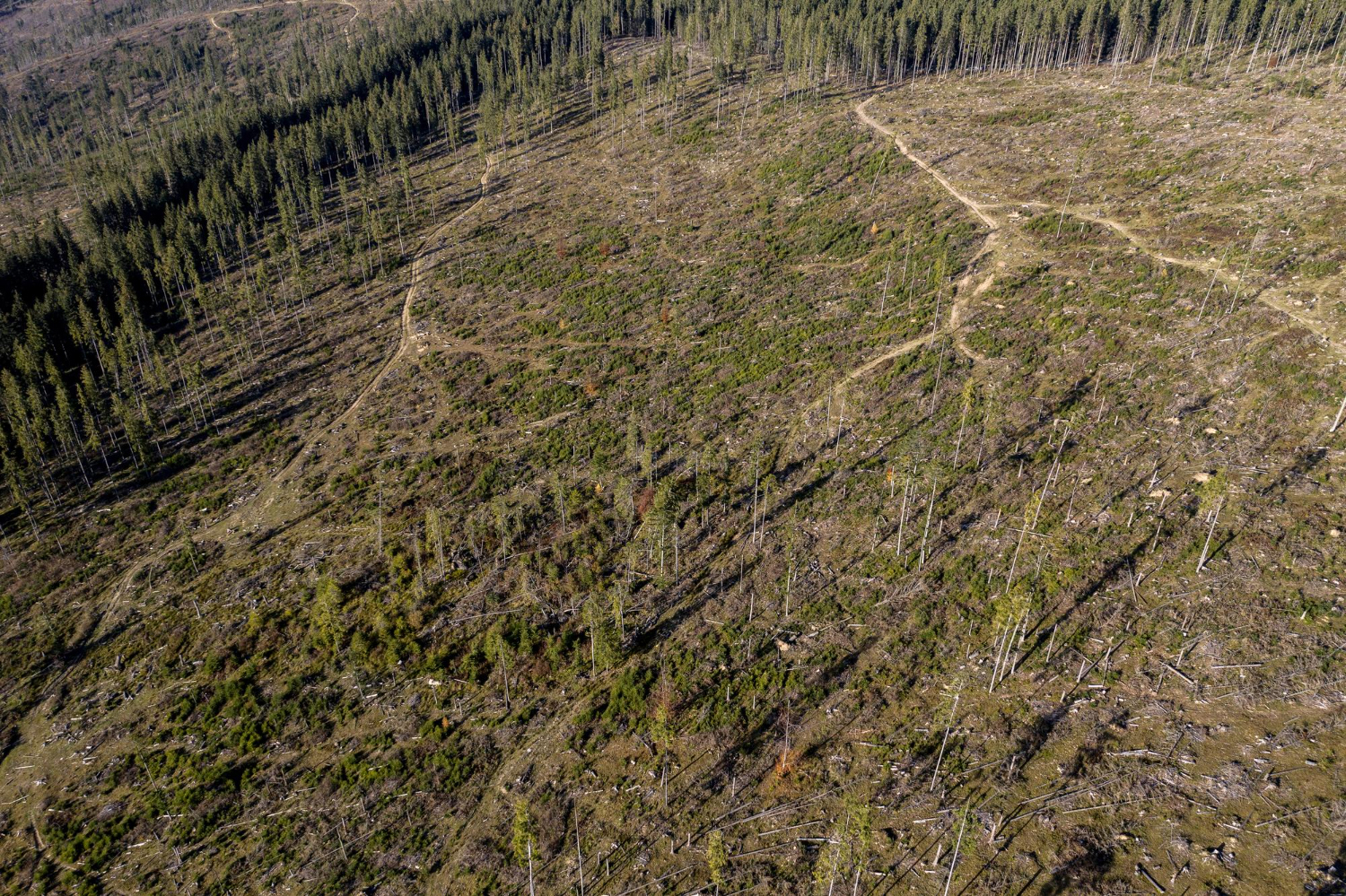
Deforestation became a real problem around 220 years ago, and we first started to understand the harm of greenhouse gases in the 1940s, a main factor contributing to climate change.
We have known for a very long time how harmful our habits are. There are around 25 000 species at risk, and the majority of these are because of our farming practices. Land abuse and pollution of all sorts are killers. To play devil’s advocate, one could say, “let the strongest species survive”.
But this would be very narrow-minded and to our own detriment considering the fact that The World Health Organization, or WHO for short, says air pollution is responsible for around 7 million people’s premature deaths every year. That is a lot of people!
We need to consider the web of life and ecosystems in general. Bees pollinate about one-third of the veggies and fruit we chomp. Air pollution has significant negative effects on their navigation, health, reproduction, and overall habits. If they were to go extinct, what will soon follow within 3 to 6 months (my best estimate) would be a global ecosystem collapse, leading to mass starvation of our species and many others; subsequently, disease will follow, and then the extinction of mankind and many other animals and plants. This might sound like an exaggeration, but the truth is, it is an extremely probable outcome if humans didn’t take extreme action to mitigate and find alternative solutions to the roles Bees play in our ecosystem. My point is, we need to Bee careful.
Many species of bees (of which there are about eight) are under threat from climate change, and a lot of their habitats are threatened by our cities. To protect all living things, we also have to protect the environment because an ecosystem is not just living things; it includes rocks, sunlight, and many other components. Survival of the fittest is a concept that works in the model of evolution, not environmental degradation by man on an accelerated and global scale that does not allow evolution to keep up. There is a difference between survival of the fittest (extinction of species that failed to adapt or evolve over a reasonable and natural period of time) and ecocide.
Sacrifice is built into ecosystems, for example, through the concept of ‘kin selection’. This is when a living thing favors the reproductive success of a relative over its own life. Worker bees are excellent examples of this. Selective reproduction in nature might actually be part of its plan (it certainly has mathematical merit), and one could even entertain a debate that homosexuality is a type of natural population control. Homosexuality is found in many species. There are around 1500 documented types of mammals, birds, insects, and even some fish, making homosexuality perfectly natural.
A few quick nuggets: “Biotic” means living things. “Abiotic” means non-living things. An epiphyte is a plant that grows on another plant. “Citizen Science” is a real thing. Now that your brain is packed with a little more information, let’s talk about your actual brain.
~
Our brain size, in proportion to our body, and when compared to other animals, is impressive. Our brain went through four major growth spurts, and there is evidence that these spurts happened during periods of time with high volcanic activity, leading to the theory that radiation around volcanic zones helped the evolutionary process.
A big brain likes to have tools. Most people are unaware that there are a variety of animal species that use apparatuses to help with tasks. Crows, elephants, dolphins, Mr Octopus, and chimpanzees are a few examples I can give. Chimps strip leaves off twigs to make sneers to dig bugs out of crevices in trees, or worse, to kill bush babies. (Chimps unfortunately share a number of unpleasant traits with us humans: they murder, kidnap, and steal.)
Sex in nature is not taboo. It is an essential mechanism, and without it, life may never have evolved to anything more than blobs of molecules. The first sexual “beings” we know emerged around 2.5 billion years ago, named “Isogamous” by biologists. Sex is information sharing.
Humans invented technology to transfer information in data files using computers. Nature does the same thing with encoded DNA, which is passed on during the reproduction process. A single gram of DNA is able to store about 215 million gigabytes of data. There is about 60 zettabytes of information in your body’s cells. DNA defines us. It tells us how to grow an ear or breathe. DNA gives us instincts to help us find food or protect our children. It really is remarkable stuff!
Even species with the most advanced DNA need a variety of other beasts and plants within an ecosystem in order to survive. An ecosystem can have more than one stable state, but no system can maintain a state indefinitely, and ecosystems will always be in flux. Our DNA is also in a state of flux, always responding to influences. Each animal and plant present today is an upgrade from an earlier version but one that could not have developed without the external influences of the rest of the eco system.
Imagine for a moment trying to run Windows 11 on a PC from the year 2000, or vice versa. Each was perfect for its environment at the time but are highly inappropriate and unstable in each other’s environments and networks. Another way to look at it, dinosaurs were powerful and mighty back in their day but would struggle in today’s climate and environment. In order for new life to thrive, old life must cease.
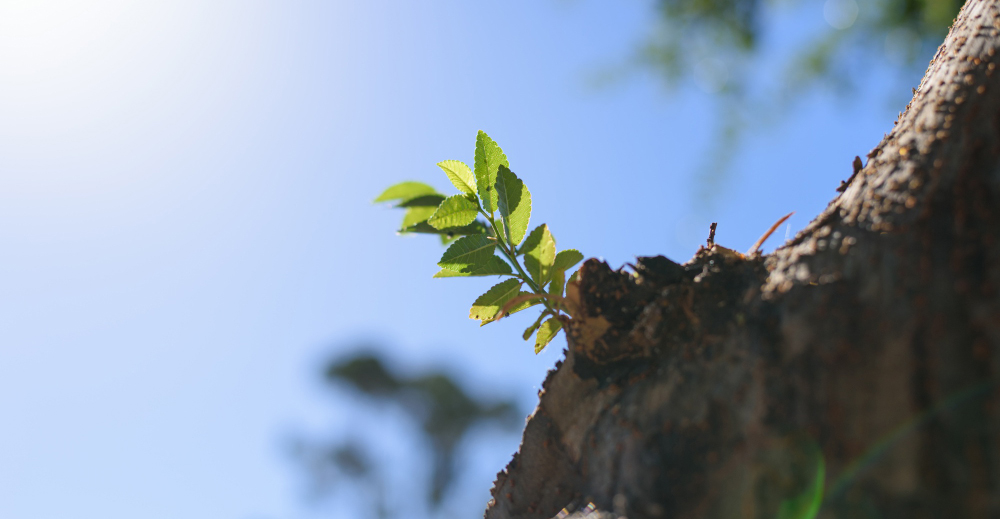
Unfortunately, the pace at which life can evolve is limited by the sluggish speed of DNA progression, and that is why the global warming and climate change we are experiencing, which is substantially faster than normal, will be a death sentence for a lot of living things. Simply put, life cannot keep up.
Humans have harnessed the power to change the environment, and we don’t need to wait for our biology to respond. This has given us a sense of dominion, but when you assess our position in the context of ethics, our ability to shape environments becomes a responsibility.